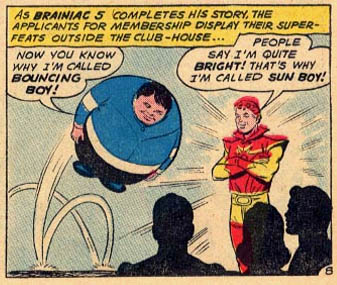
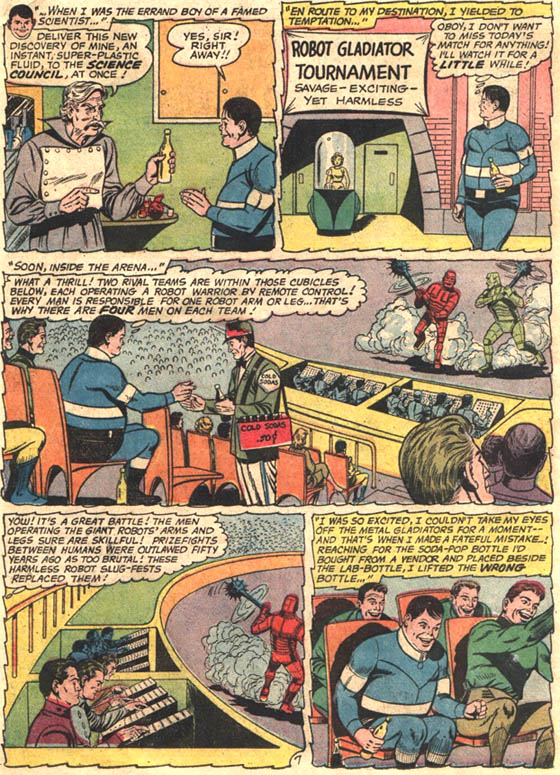
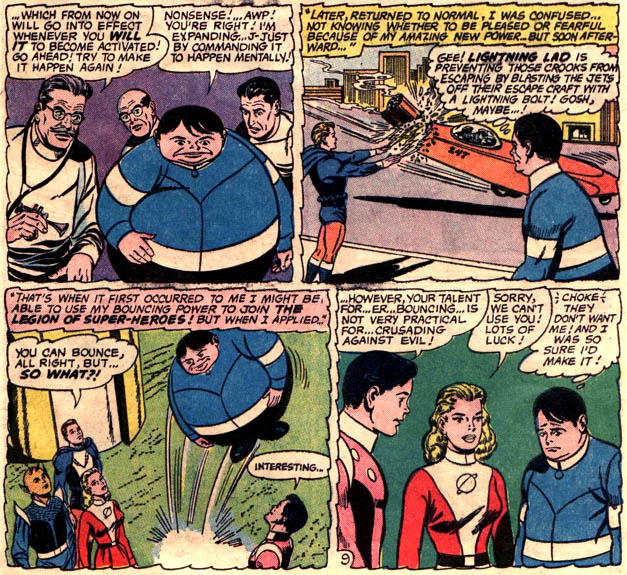
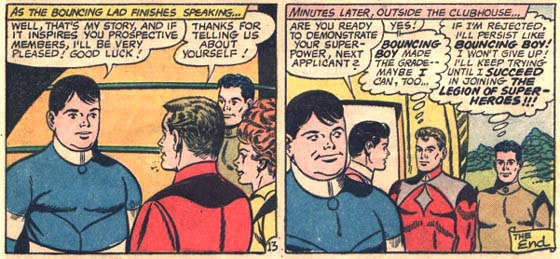
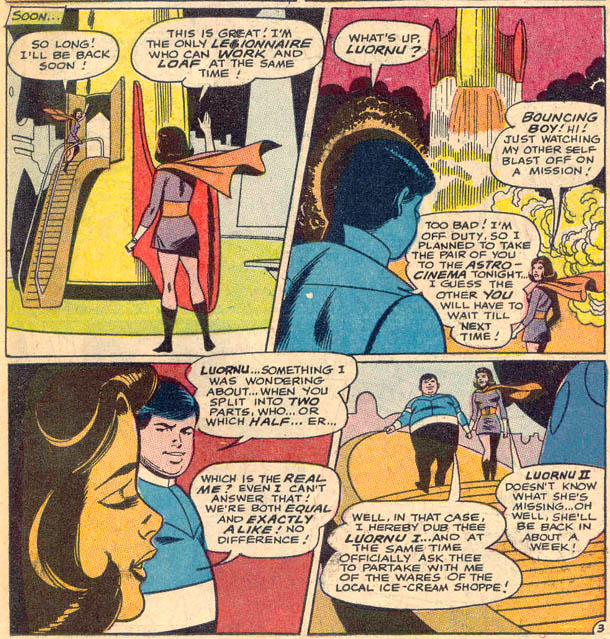
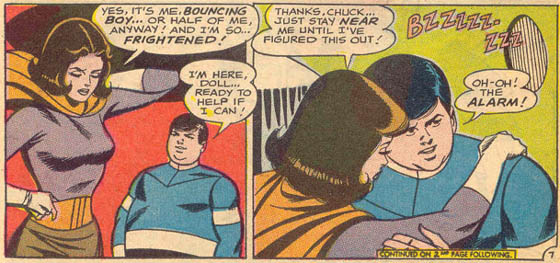
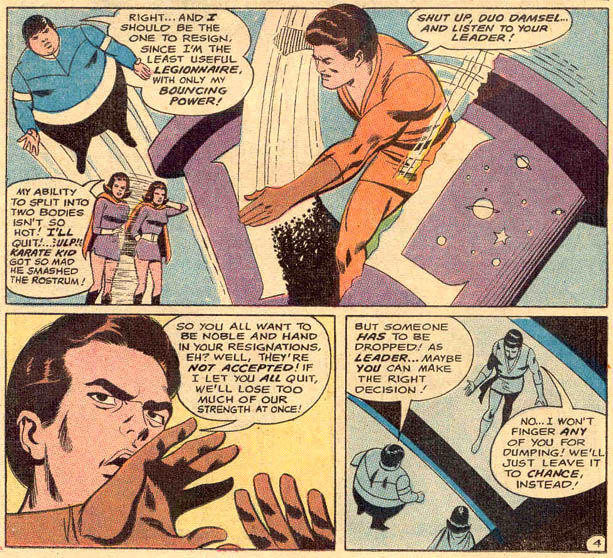
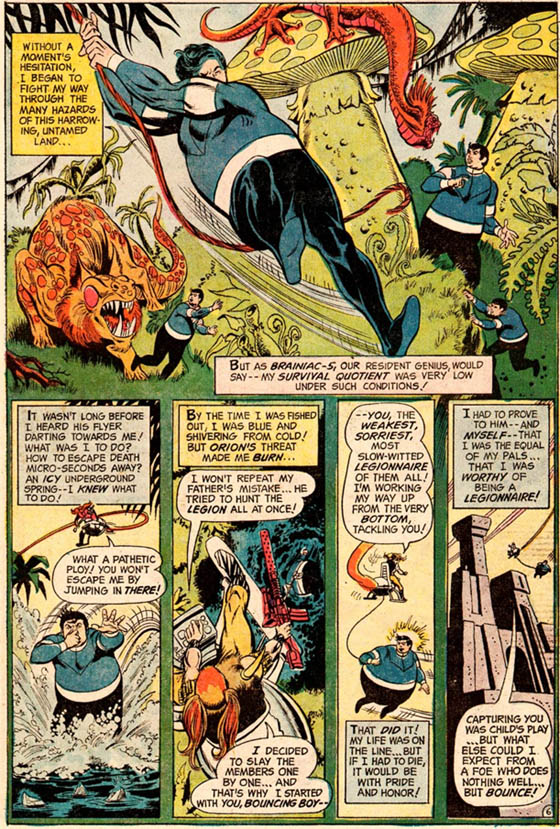
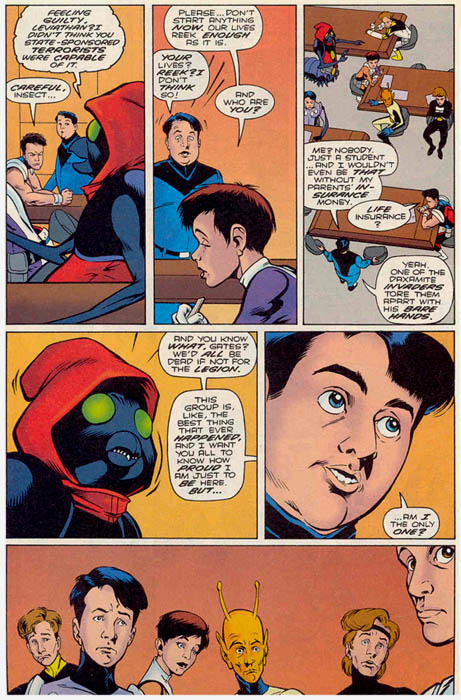
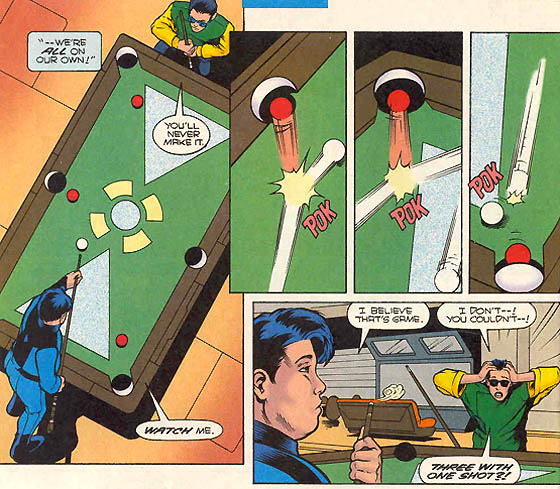
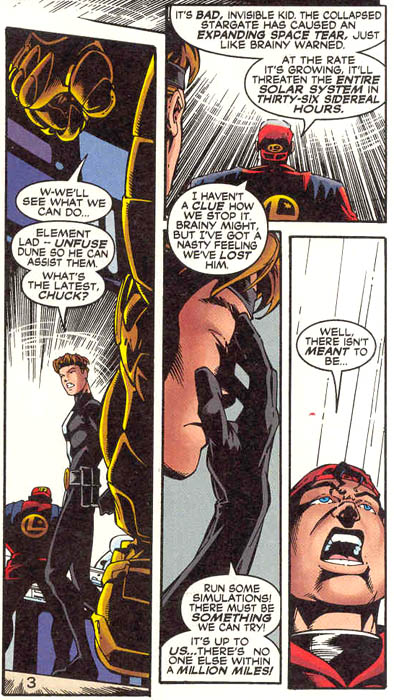
Hero History: Bouncing Boy
--by Matthew Peterson
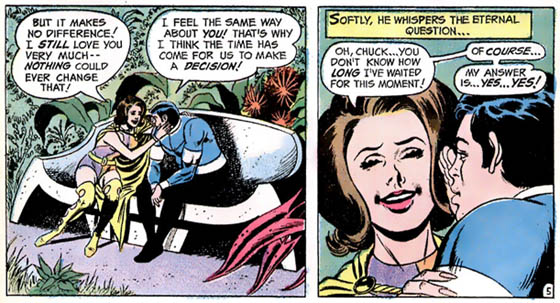
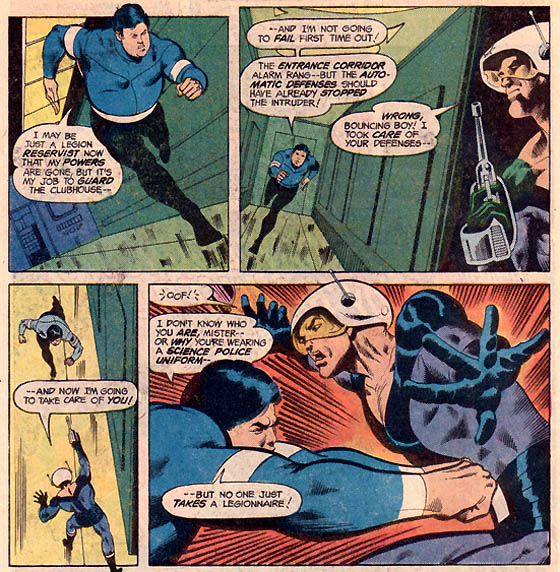
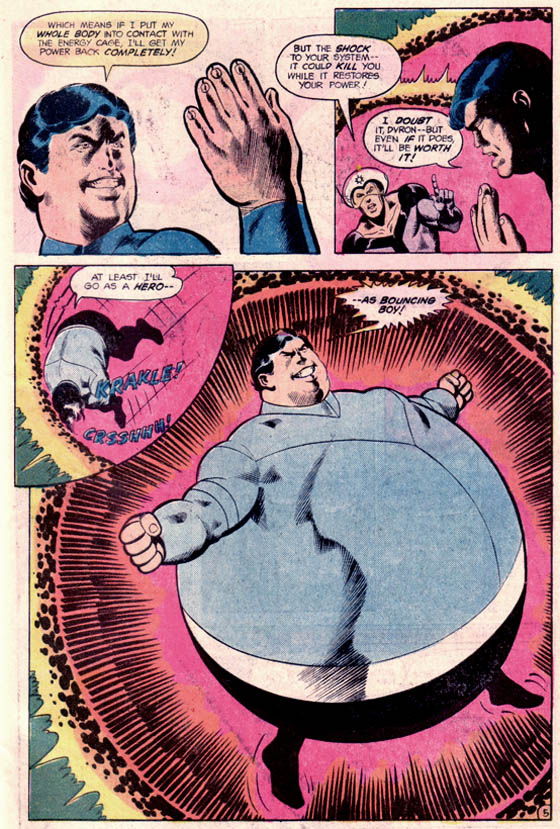
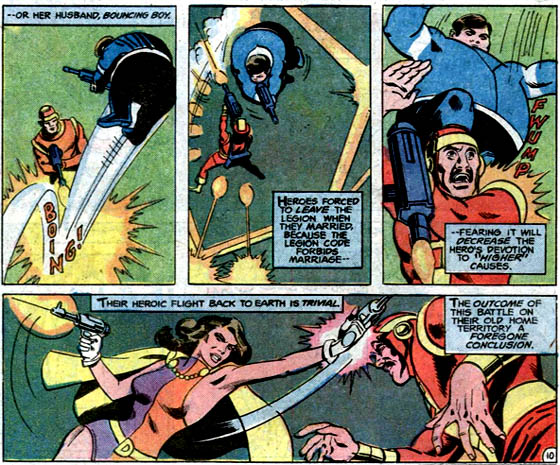
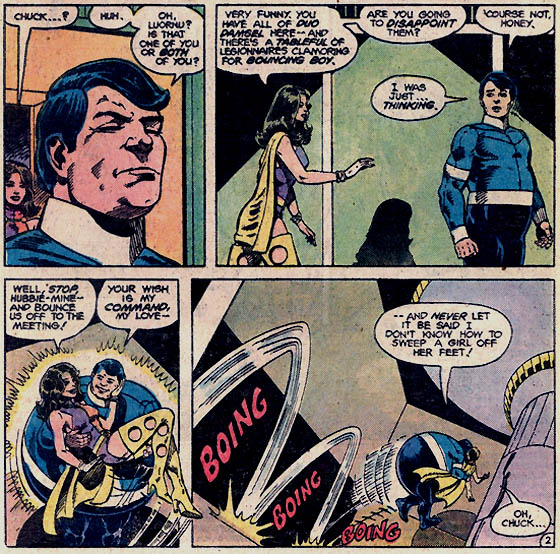
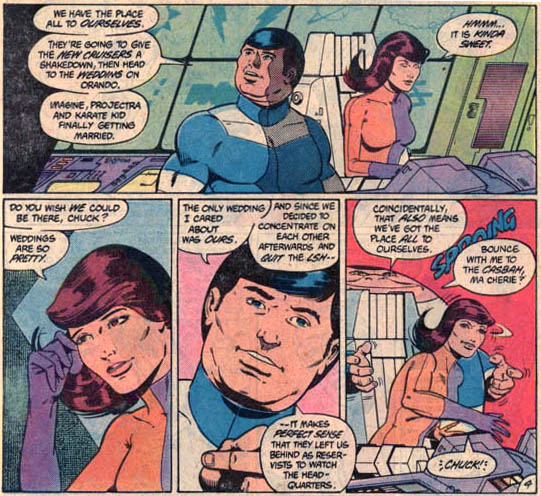
Or - “How To Really Make An Impact As A Legionnaire…”
You are here: Diigo Home > Call Me What You Want > Call Me What You Want's lists
Items:3 | Visits:5
Category:Others | Tags:motivational, success_stories, bridge
Created:on 2008-05-29 | Updated:on 2008-07-06
List where I put all things that jumpstarts my passion.
Tags: bouncing boy, inspiration, motivation, character development on 2008-07-06 -All Annotations (0) -About
more fromwww.majorspoilers.com
Or - “How To Really Make An Impact As A Legionnaire…”


The proverb says “the honest man is chased from ten villages.” It was true then and it’s true now.
Tags: efficiency, effectiveness, progress, validity, correctness, honesty, illusion, lack of incentive for community to discuss, product of democracy, reaction by society, skepticism, tragedy on 2008-05-21 -All Annotations (0) -About
more fromwww.businesspundit.com
In the early days of the web, I was always the guy responding to chain emails with links to Snopes or Urban Legends. And now, with this blog, I've been critical of "wisdom of crowds," of Google's strategy and stock price, the book "Good to Great," and lots of other things people on the web seem to love. Sometimes I turn out to be right, and intellectually it always feels good, but it's always a pretty lonely vindication. The next time I turn negative on something, no one says "better listen to Rob…"
You see, people really prefer positive people. People need hope, and that is why it sucks to poke holes in the stuff they believe. Our delusions are very dear to us. We want to believe that there is at least the small possibility that Bill Gates really will send us $1000 for every person we forward an email to, and we don't like it when someone tells us it isn't true.
Now that’s not to say that every idea is a good idea or that there is not a place for healthy skepticism. But it is to say that a skeptical mindset can really get in the way of accomplishing things.
As a final comment, my personal advice to everyone is to know your bent and then “go for the no.” That is, if you are naturally a “no” person, you should consciously spend time looking for the “yes” reasons. If you are naturally a “yes” person, spend time looking for the “no.”
Tags: communication, conversation, manipulation, psychology, society, moving efficiently between obstacles, pressure, mistakes, offense on 2008-05-29 -All Annotations (0) -About
more fromknowledge.wharton.upenn.edu
The final stage of Woo is to secure both individual and organizational commitments. "One of the most common mistakes people make in selling ideas," says Shell, "is to think that their job is finished once they succeed in getting someone to say 'yes' to their proposal. That's only the beginning. Research shows that in most organizations, a minimum of eight people will need to sign off on even simple ideas. The number goes up from there. So after you move the individual, you also have to move the organization."
Shell and Moussa use a number of cases from business history to illustrate this point. For example, they tell the story of Charles F. Kettering, a brilliant inventor and engineer from the 1930s whom many consider an equal of Thomas Edison. Kettering invented such things as the automatic transmission and safety plate glass, but one of his best ideas -- the air-cooled automobile engine -- sat on the shelf for decades until the Volkswagen Beetle incorporated it. Kettering convinced Alfred Sloan, GM's top executive, that producing the air-cooled engine was a good idea, and the company's executive committee gave the go-ahead to make a limited number of cars with the prototype. But instead of following the idea through, Kettering went back to his lab to concentrate on the technical aspects of the project. The committee handed the production assignment to the Chevrolet division, whose top managers had never been brought into the persuasion process. They let the idea languish and it was eventually abandoned. "Kettering made a fundamental mistake: He didn't follow up and keep the pressure on," Shell notes. "He didn't do the political coalition-building needed to implement his idea."
Andy Grove's 'Constructive Confrontation'
Individual personality plays a key role in how you influence others, Shell adds. The book therefore includes two personalized "diagnostic" tests that readers can take to discover their persuasion strengths and weaknesses. One of the diagnostics is the "Six Channels Survey," which is designed to help people learn which of the key channels of influence they feel compelled to use most often at work and which they would prefer to use if given a choice. These channels include Authority, Rationality, Vision, Relationships, Interests and Politics. The idea is to help readers understand both how these six channels work and when they should adjust their pitch -- as Bono did with Senator Helms and Mandela did on Robben Island -- to appeal to different kinds of audiences.
A second self-administered test, the Persuasion Styles Assessment, helps readers determine the degrees of assertiveness and natural social intelligence they bring to the idea-selling process. The authors point out that there is no one "correct" style of persuasion; rather, the key is being self-aware so you know how you perform and how others will perceive you.
For example, Shell and Moussa illustrate the "Driver" style (a highly assertive type who gives only limited attention to the social environment) by examining how Intel CEO Andy Grove managed the persuasion process at Intel during his years as that company's leader. Labeled the "screamer," Grove could be intimidating to people who didn't know him well. But he was also willing to listen if people stood up to him and matched his passion. To facilitate communication, Grove instituted what he called a culture of "constructive confrontation" that freed everyone to be as blunt and assertive as he was. The result was a high-stress environment, but one in which everyone could speak their minds.