6 items | 18 visits
A list where I put stuff related to how behaviours could have or did alter events
Updated on 2008-07-06
Created on 2008-04-29
Category: Cultures & Community
URL:
www.majorspoilers.com/...1985.htm - Preview
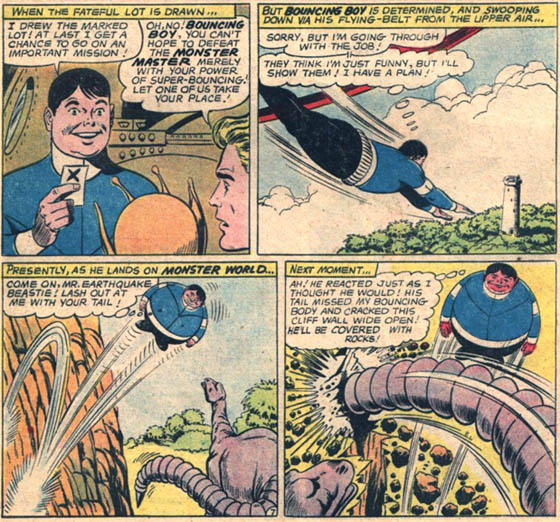
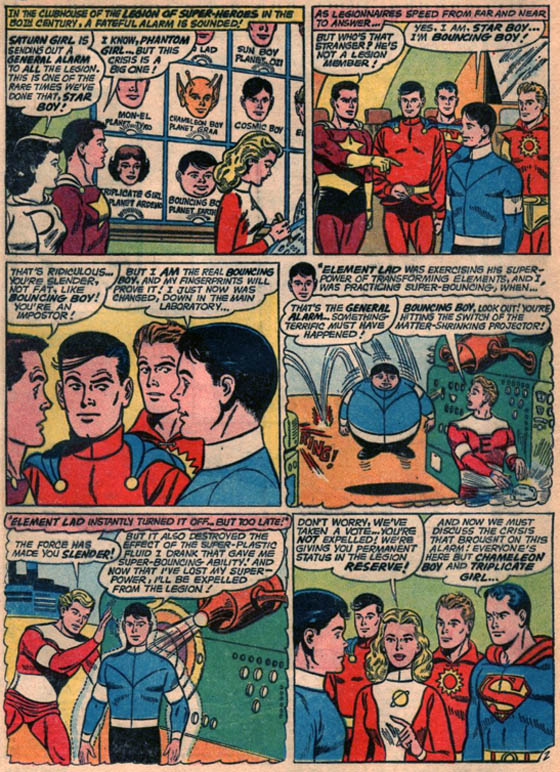
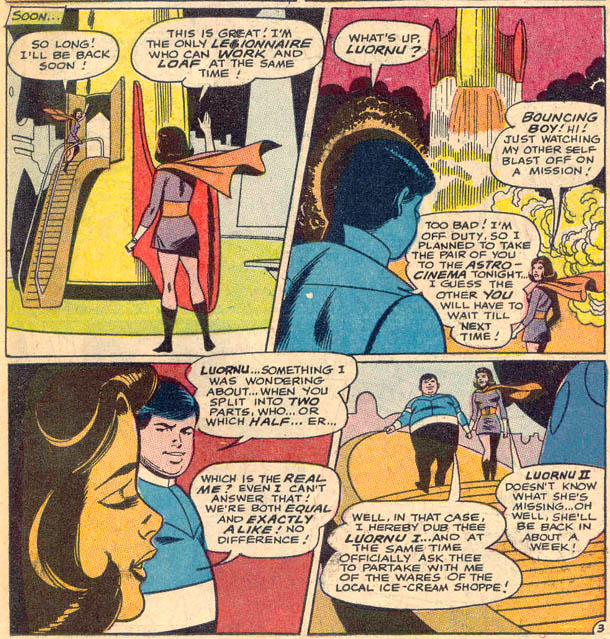
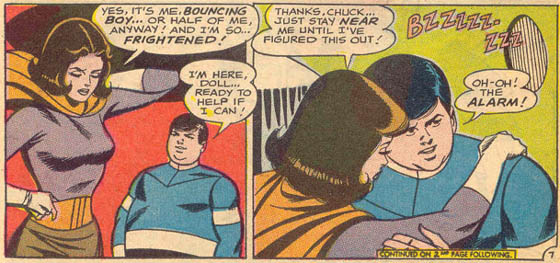
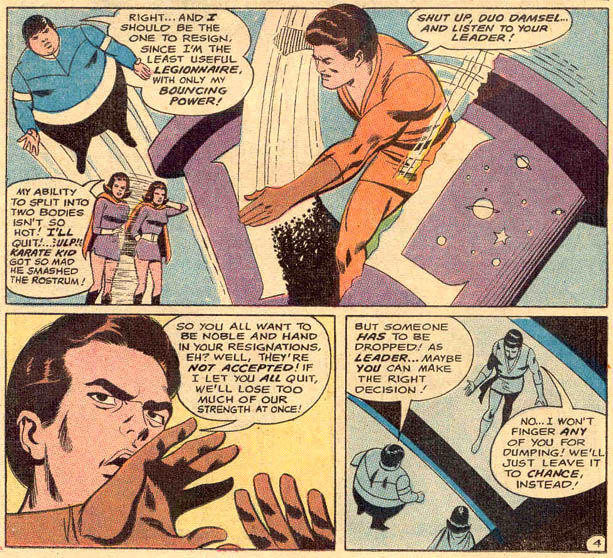
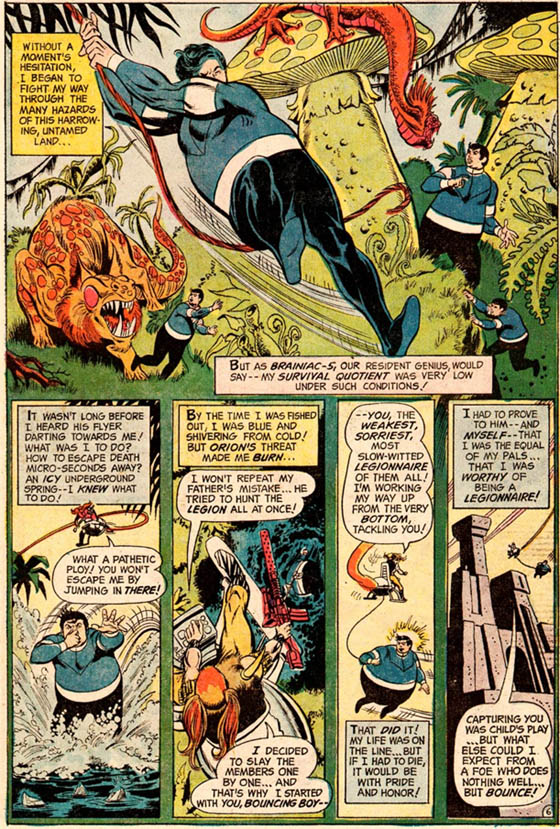
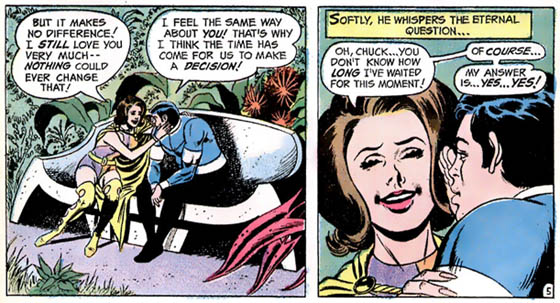
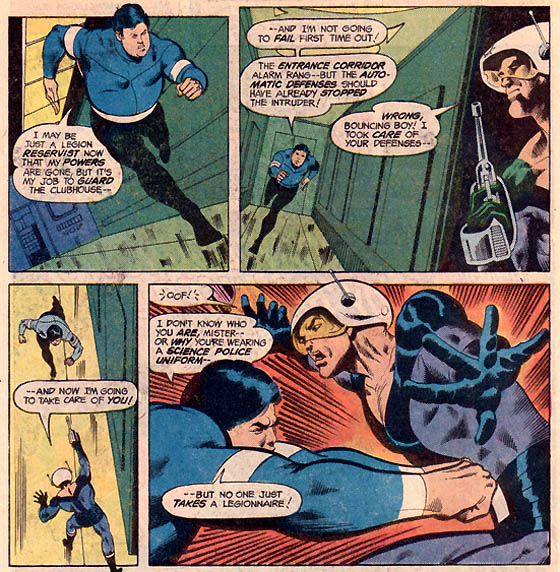
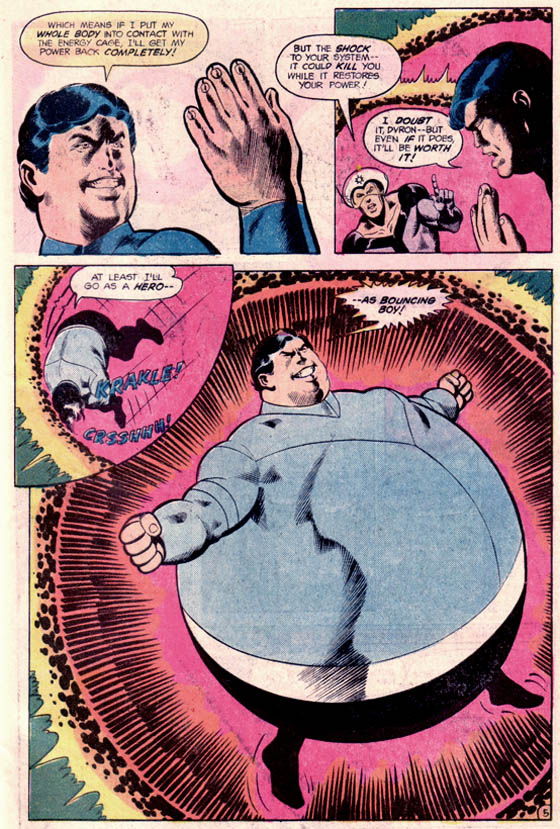
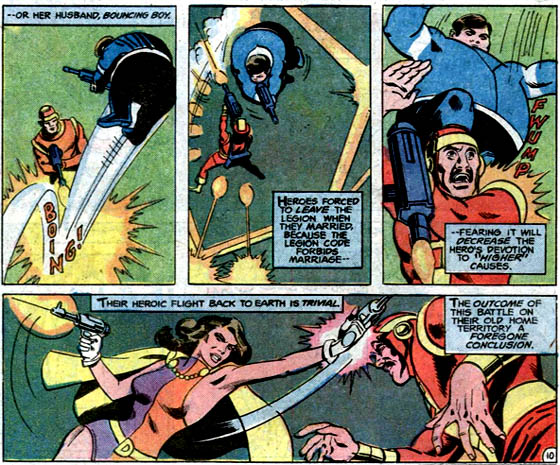
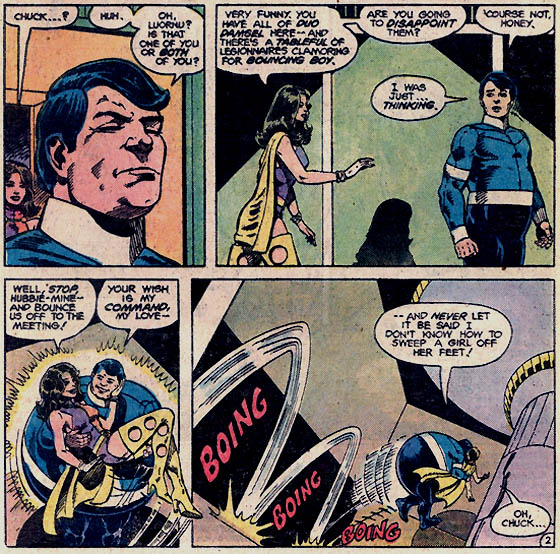
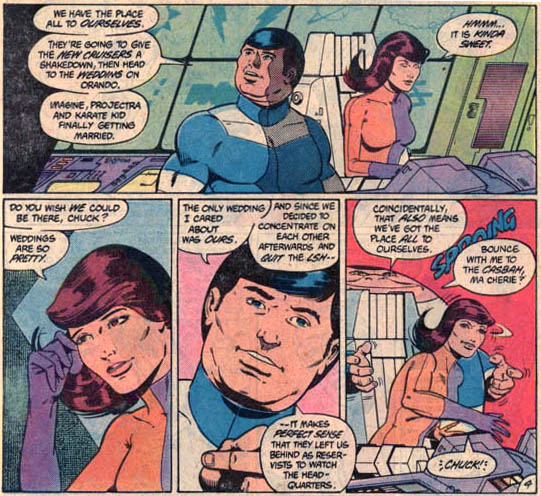
bouncing boy inspiration motivation character development on 2008-07-06
Or - “How To Really Make An Impact As A Legionnaire…”


knowledge.wharton.upenn.edu/article.cfm - Preview
communication conversation manipulation psychology society moving efficiently between obstacles pressure mistakes offense on 2008-05-29
The final stage of Woo is to secure both individual and organizational commitments. "One of the most common mistakes people make in selling ideas," says Shell, "is to think that their job is finished once they succeed in getting someone to say 'yes' to their proposal. That's only the beginning. Research shows that in most organizations, a minimum of eight people will need to sign off on even simple ideas. The number goes up from there. So after you move the individual, you also have to move the organization."
Shell and Moussa use a number of cases from business history to illustrate this point. For example, they tell the story of Charles F. Kettering, a brilliant inventor and engineer from the 1930s whom many consider an equal of Thomas Edison. Kettering invented such things as the automatic transmission and safety plate glass, but one of his best ideas -- the air-cooled automobile engine -- sat on the shelf for decades until the Volkswagen Beetle incorporated it. Kettering convinced Alfred Sloan, GM's top executive, that producing the air-cooled engine was a good idea, and the company's executive committee gave the go-ahead to make a limited number of cars with the prototype. But instead of following the idea through, Kettering went back to his lab to concentrate on the technical aspects of the project. The committee handed the production assignment to the Chevrolet division, whose top managers had never been brought into the persuasion process. They let the idea languish and it was eventually abandoned. "Kettering made a fundamental mistake: He didn't follow up and keep the pressure on," Shell notes. "He didn't do the political coalition-building needed to implement his idea."
Andy Grove's 'Constructive Confrontation'
Individual personality plays a key role in how you influence others, Shell adds. The book therefore includes two personalized "diagnostic" tests that readers can take to discover their persuasion strengths and weaknesses. One of the diagnostics is the "Six Channels Survey," which is designed to help people learn which of the key channels of influence they feel compelled to use most often at work and which they would prefer to use if given a choice. These channels include Authority, Rationality, Vision, Relationships, Interests and Politics. The idea is to help readers understand both how these six channels work and when they should adjust their pitch -- as Bono did with Senator Helms and Mandela did on Robben Island -- to appeal to different kinds of audiences.
A second self-administered test, the Persuasion Styles Assessment, helps readers determine the degrees of assertiveness and natural social intelligence they bring to the idea-selling process. The authors point out that there is no one "correct" style of persuasion; rather, the key is being self-aware so you know how you perform and how others will perceive you.
For example, Shell and Moussa illustrate the "Driver" style (a highly assertive type who gives only limited attention to the social environment) by examining how Intel CEO Andy Grove managed the persuasion process at Intel during his years as that company's leader. Labeled the "screamer," Grove could be intimidating to people who didn't know him well. But he was also willing to listen if people stood up to him and matched his passion. To facilitate communication, Grove instituted what he called a culture of "constructive confrontation" that freed everyone to be as blunt and assertive as he was. The result was a high-stress environment, but one in which everyone could speak their minds.
More profound than it sounds. Worth a peek though this is one of those lists where you're better off focusing on the descriptions than on the actual items on the list
notdirtywriter.net/?page_id=218 - Preview
religion sheep bliss conformity on 2008-05-04
Article on what it means to step up to challenges - talent or no talent
www.realgm.com/...viewtopic.php - Preview
pressure on_off switch elevating to the next level control switching_gears intensity clutch efficiency on 2008-05-29
passionbasedlearning.com/...how-to-overcome-fear - Preview
fear identity streaminglinity on 2008-05-29 and saved by 2 people
Dangerous things with potential to cause pain trigger fear. The focus therefore shouldn’t be on fear itself but on what triggers it instead. That’s the primary problem. How you define things as “dangerous” is the true key and it should be the first step you start working on.
These are things that can stop you from breathing and put you 6 feet under the ground:
… and the list goes on. :-)
These are examples of things you need to redefine and think about differently. You may be wrongly perceiving them as “dangerous” and as a result they trigger within you unnecessary bad fear.
What’s the worst that could happen if you started a business? Will you fall so bad you won’t be able to get up and continue walking? The truth is, it’s not nearly as bad as you think it will be.
I have not failed. I’ve just found 10,000 ways that won’t work. - Thomas A. Edison
Remember, if you fear it, it does not mean it’s an inherently dangerous or crazy thing. The cause of fear is you and that’s a good thing because it means you are in control of it. Since you turn fear on, you can also turn it off.
So go ahead. Redefine the idea of “starting a business” and remove it from under the “dangerous things” category you have in your mind.
Go for it. Yes, you may fail but if you do, you’ll learn a lot from the experience - more than any book about entrepreneurship can ever teach you. You still win. In fact you’ll be wiser and smarter, and from there, you can try again.
If you’re passionate about it, it shouldn’t be a problem. Success is a stack of failed efforts.
There was this girl I really liked back in high school. At first I was scared of asking her out even though we shared a decent friendship. K was absolutely gorgeous - her eyes, her smile, the way she walked… all so very gorgeous. I wanted to tell her but I just couldn’t. I was afraid of getting the same vicious “no” I got from another girl previously.
Then one day, a seemingly super popular guy asked K out. She rejected him! It turned out, what seemed popular to many people, wasn’t to her.
Eventually I built up the courage to ask K out and to my happy surprise, she said yes. We dated for about a year and it was great. Today K and I are very close friends and so far, we’ve known each other for almost eight years. :-)
Make your move. If you get a “no”, sure, it might sting a bit - momentarily. But at least you won’t be busy wondering what if the answer was “yes”. At least you’ll know and with time, the fear of approaching someone you adore will go away.
Getting rejected by that special someone you like is not a dangerous thing. It doesn’t have to make you fearful. Redefine it!
Fear can have the power to cripple you - if you allow it to. It can also be a very powerful thing that motivates you. The secondary real key is not overcoming fear but utilizing it to your own advantage.
Have you ever been on a roller coaster? It’s scary seeing that thing twisting and turning. Worse still are the shouts and screams. Well, at least that’s how it was like the first time I went to ride one. I didn’t. Just before running to the queue I remembered an article I read about some guy who fell off one and died.
All the kids had fun that day. Some went on the roller coaster more than twice. All of them enjoyed it except me. I went back home feeling bitter and full of regret.
About two months later we went to the theme park again. I thought to myself, the probability of dying in a car accident is probably more than that of falling off the exciting joyride. And so on that unforgettable afternoon, I went on the roller coaster three times. In a row.
I did it because I was afraid… afraid of missing the fun.
Personal commentary about the challenges of writing a book and getting it published and attracting the optimum audience
www.2blowhards.com/...000809.html - Preview
book writing farming marketing childcare publishing myths communication storytelling education schools society on 2008-05-21 and saved by 3 people
Isn't it interesting how many people dream of writing a book? It's sweet, and it's (mostly) harmless, and I guess I once semi-shared that dream, and I guess one or two brain cells still make room for the possibility that I will someday write a book (fat chance). But, but, but ... Then I followed the book-publishing industry for 15 years.
Fact #1: Millions of people are working on books, or believe that they could write a book, or are planning to write a book.
And I'll bet that for many of them a part of that fantasy is the making - a - living-as-a-freelancer -doing-something-interesting-rather- than-working-as-a- flunky-in-a-boring- job element. But how many people in the country actually manage to make a living writing books? A couple of hundred.
Millions would like to do it. A couple of hundred actually manage it.
As a consequence of these sorts of realities, most serious-nonfiction writers either hold down fulltime day jobs (healthcare!) and do their writing during the evening and on weekends (whoops, there goes the private life!), or spend a lot of the time that they'd like to spend writing chasing down grants, fellowships, and stretches at writer's colonies instead. (This bunch is usually very worried about health care. See my posting on health care and the arts here.)
Not long ago, I ran into a woman acquaintance I hadn't seen in years, during which time she'd written a first-class biography of a famous man. We bumped into each other shortly after her book had been released, and I assumed she was basking in the good reviews, and exultant about the way her publisher was promoting the book. "This must give you a great feeling, as well as a great platform into your next book, no?" I said.
She rolled her eyes and told me emphatically that she was never going to write another book. "What I'm looking for now is a nice little not-too-demanding job with an office, regular hours, a health plan, and a regular paycheck," she said.
So why do people do write books? I come up with these possible explanations:
All of which leads me to a Blowhardish musing. It's such a pain to write books, it's such a bother to go through the publishing process -- what kind of person is willing to put him/herself through this? Answer: a very narrow demographic -- the obsessed and the ambitious. Exceptions allowed for (hi Hugo!), this would seem to mean that most of the books we've interacted with over the years have been written by people who are nuts. Let's grant that a few of these nutcases have talent and brains -- still: funny, no?
And this is a big part of why I generally celebrate digital media -- because the new tools give people from the non-nuts range of humanity a better chance to contribute and take part in the conversation that is "culture." How many such "normal" voices have really been heard in this conversation before? But these days, if you write and publish a blog, for example, the publishing part of blogging is trivial, at least once you've set the blog up (or in the especially inept case of the Blowhards, paid a good webteam to do the hard stuff). You can say what you have to say, press a button -- and what you have to say flies right out there and becomes part of the ongoing culture-thing. Never before in the history of blah blah blah. Very cool, in any case, and I'm going to follow how this affects the tone of the culture-conversation with interest. Blogs have already had quite an impact on journalism. What kind of impact will they have on the cultural world? (Huge, I hope.)
Over the years, a few people have asked me for advice about writing books -- fools! Still, I tell 'em what I really believe: Since you probably won't make money on your project anyway, why not do it in a way that minimizes your trouble and results in something that pleases you? How to do this? Publish your book yourself. (Self-publishing is a growing and happening thing.)
But why turn your urge to create into "writing a book" in the first place? You say you've got a story to tell? Well, why does it have to be a book? You'll burden your life with a tedious project for a couple of years, you'll probably overstretch your material, and then no one will read the results. Why not realize your project in a manageable and pleasureable way instead? Put in a month of writing, keep it to a compact length, and post it to the Web. (There really aren't many stories that need more than 50 pages.) It's certainly true that no one may pay attention to your work despite its being out there on the Web. But at least you'll have told your story, enjoyed the process, made your work available -- and you won't have ruined your life, or broken your heart.
No one listens to me, of course, and it's probably better that way. I confess that The Wife berates me (lovingly and charmingly, of course) when I go on like this. She says I'm being a killjoy. Lots of people dream of writing books. What a harmless dream -- why kill it? And she's certainly got a point. I, on the other hand, feel that my point isn't to crush anyone's dreams. Why not make this basic information available? But maybe The Wife is right. It's certainly true that, after 15 years of following the book publishing world, I do sometimes wish people would be a bit more realistic in their thinking and talking about books. But is that an awful wish? Where books and publishing are concerned, maybe it is, I don't really know for sure.
Best,
Michael
Hey Alexis, You' ve got good instincts, and The Wife would agree with you about the "relish" thing, although I remain convinced (deludedly, apparently) that I'm just performing a public service. But glad to see you doubting my motives ....
Anyway, the "couple of hundred" figure was given to me by the guy who runs one of the big authors' organizations, so the figure's trustworthy even if I'm not. I can't imagine anymore more quaified to make a decent guesstimate than he.
I said to the guy, How many people in this country make a living from writing books? He said, Do you want to include all kinds of books? I said, No, just bookstore-type books. No textbooks, and let's not include people who write computer-instruction books. And he said, Oh, in the low couple of hundreds.
So yeah, the figure would include sci-fi writers, mystery authors, self-help authors, literary people, etc. The authors of all the stuff at the local Barnes & Noble, minus the computer section.
As I say, one of the surprises of the field is how many even very big names can't and don't get by on what they make from their books.
Can anyone think of a similar industry -- where the people who produce the product don't generally make a living doing so? I can't, but maybe I'm overlooking something obvious...
Another industry: acting.
Only about 1 in 20 professional actors support themselves entirely by acting. This at first occasions rather sad but heartfelt discussions as people struggle to make sense of the idea that they are "really" actors even if they can't support themselves acting.
I wonder if Wallace Stevens worried that he wasn't "really" a poet since he made no money at it.
Are there other industries that have a ratio of paid creators to paid sellers comparable to book publishing? Yes, several that I have worked in:
Game design - Thousands of designers, perhaps as many as a few dozen who make a living (this neglects role-playing game designers, of which more later.) There are thousands of stores in the US alone that sell games, each of which has at least a few employees. There are more hundreds of people employed in printing, assembling, and distributing games. As for the designers, a distributor of my acquaintance used to tell prospective game designers: "Take $50,000 in cash and put it in a suitcase. Go to the middle of the highest bridge you can find and throw that suitcase as hard as you can. At the end of this process, you will not be worse off financially, you won't have a garage full of unsalable games, you won't have suffered the pains of trying to sell your game, and you'll be done years earlier."
Role-playing game design - Again, a few dozen people making a living, hundreds of others spending nights and weekends (or retirement funds) trying to make a living. Very similar to book publishing in the amount of hard work required, but there are many more self-published authors.
Hobby accessories - Whether model railroad scenery, after-market RC car pieces, or doll-house furniture, this is another garage industry (or set of industries).
The unifying theme seems to be that the people doing this are trying to find a way to have their fun and eat it too. 8-)
From an economic point of view, I'd guess that the combination of expected monetary reward (in the long term) plus the nonmonetary reward of working with your hobby (more illusory than real) result in people entering these industries with wildly inflated opinions of their own prospective success.
There is so much to read and to look at online, it's like being in a vast storehouse full of treasures - literally acres and acres full of gold, jewels, and valuable artifacts - and you can only take as much as you can carry in your hands. You don't know what to choose so you just keep looking, briefly examining and laying aside one piece of treasure and then the next and the next and the next. The Internet is like that for me. I find many sites where I want to spend more time reading but instead I just keep on surfing and finding other interesting sites. I always plan to come back to them... "later." ...
I might actually be reading more now; it's only the routine that has changed. Maybe the availability of so much reading matter makes it seem like I'm not reading as much as I should. It has never occurred to me that I should try to read every book and magazine in the public library, but for some reason with the world's biggest library right here in the corner of my dining room I feel guilty about passing over anything I'm the least bit interested in. I feel I have to read it all.
One alternative to job versus starvation may be to live somewhere off the beaten track that is very cheap. I have lived for 22 years in a small New Mexico village 75 miles by air from the nearest city, and in a determinedly un-chic part of the state.
I live in a 100 year old stone house with 4 main rooms ( a nice piece of "Alexandrian" vernacular architecture) that cost me less than a cheap new car does today. My newest car is 13. My wife currently works part- time in the local post office. At times she has worked full- time, and often had no job at all. Our main expenses are books and travel.
And travel itself can help pay the bills. We have in the last decade spent time in London, France, Zimbabwe, traveled twice to Mongolia, and are heading for Kazakhstan in the fall. All trips were at least work-related, and the last 3 paid for up front. What other life would give me freedom to do what I like and write about it? A job that paid for a month here and there would take all my time...expensive!
Isolation was more of a problem 20 years ago. Now, with blogs, e-mail, and internet it's not even a factor. I "talk" every week with people in England, New York, Latvia, Finland, Russian, Kazakhstan and more. There is more info a click away than you could have had in, say, Victorian London.
Unfortunately, there are vast numbers of individuals who believe that taxes and the huge government that results from it are good for us. How many authors would be able to suppport themselves if they didn't have to support millions of nonproductive government workers at the same time? How many government workers read? How many of them are so bored with their jobs at the IRS or the CIA that they're writing a novel in the hopes of escaping from their boredom? How many of the government thrillers are competing with other "art" to be published? Think of all the tax accountants and attorneys who make their living by pushing tax-related papers, who never produce any books, cars, houses or products that add any enjoyment to life?
The huge cut that the government sucks out of the markeplace at every level, the author's advance, the agent's salary, the bookstore's income, is money that creative people can no longer use to support creativity. It's time they don't have to write and it's money that they no longer have to buy the books that add value and enjoyment to their lives.
Yes, the money ends up in the hands of others and they will spend it. But what will the recipients of those tax dollars spend it on? Baseball? A wide-screen TV for watching football games? Will they spend it on great stories about the nature of existence and survival when their own survival is guaranteed by the money they can take at the point of a gun from those who produce and sell art?
Nobel Prize-winning ecomonist Milton Friedman noted in FREE TO CHOOSE that taxes distort markets. Once taxed, it is impossible to determine what real value is anymore because the price of something (the price paid to an author for his work or a bookstore for a book) is no longer an accurate measure of its real value to individual consumers. Markets become glutted with useless trash and real value falls by the wayside. Sounds like the book market that you described!
Responding to the point way above about childcare:
When I lived in San Francisco, it seemed as if every waiter and half the carpenters were 'really' artists of some kind - painters, actors, writers - or on a spiritual quest of some sort.
I was a carpenter/writer, and when our son was born we found a pregnant artist who wanted to run a small daycare to pay her way. Not being the kind to do things by halves, Sterret Smith had got a degree in child-something-or-other, and instead of actually living off her daycare income, it seemed as if she plowed it all back into toys and improvements (I built her a child-sized play loft, thus circulating our dollars nicely). I loved her paintings but was much more impressed by her childcare. She was truly a master in the art of starting children off in their lives. These kids had their imaginations stimulated every day, and learned how to resolve disputes without an adult's intervention (or with a minimal one) to a degree that still shows in my son's mid-teen years.
I began to wonder why there were so many young people waitressing or hammering so they could occasionally act or write, but few if any doing the same so they could be daycare providers. The latter seemed much more worth doing, or at least as worth doing, but we had all somehow absorbed the notion that it is an unromantic boring slog. For me, it probably would be, just as for some writing is pain and agony (whereas I have had months of ecstasy at the best points in novel writing) but for Sterrett it wasn't. Of course, she had endless dirty diapers, and the money wasn't good, and she depended to some extent I suppose on her husband, except that he was a freelance writer himself...
I wish childcare could be seen as more of an exciting area to work, money or not. Maybe there could be some way of starting an upward creativity spiral inb the field... Or maybe Sterrett should write a book about it... and suffer further penury.
You said "Hey, my English profs didn't tell me about this!". Right on! There is a lot more they didn't tell you..
LIKE -- universities are totally geared and set-up to make money and are businesses,not benevolent institutions designed to see you succeed.
LIKE -- when you decide to become a writer (or English student)make sure you do not ignore the fact there is competition in every field and though it seems unfair, others will succeed,
and no matter how much you love it,
you can fail consistently.
LIKE -- those who do succeed were destined to succeed through
their "success gene", that little sting of DNA that makes them blind to failure and are driven to success like a moth to a campsite lantern, even if they
studied plumbing they would end up owning a string of shops.
LIKE -- higher education is a brainwashing and re-programming process designed to produce worker-bees on various levels, it is NOT a process designed to make you rich or successful, the sooner you realize this, the more successful you become, they are there to sell seats.
LIKE -- people don't buy creative writing to entertain someone else's ego, they buy creative writing to be entertained.
The list goes on what universities don't tell their students. What they DO is sell dreams and a "product" which is a program designed to align your thinking with an agenda. What YOU have to do is figure out what that agenda is. Once you have done that you will have as much money as you can possibly stand.
Popular Rock and Pop bands don't make millions and zillions of dollars producing beautiful tracks of symphonic
masterpieces, they were intelligent business people who sell well produced songs about the money making themes like SEX, DRUGS, MURDER, WAR all of which the Beatles were a prime example of in the new commercialization of popular culture.
Most of outrageously successful and popular rapper groups have management who know it is not a matter of selling a new rhythm thousands of times for a large price, it is a matter of selling
an old rhythm millions and millions of times for a small price.
The frustration that you are feeling, the melancholy emotions, come with the sad realization people don't want to pay you for what is GOOD and what YOU want to believe in. But they will pay you for what they have been programmed to believe in.
A few tricks are writing new twists and imaginative new versions on; the masses are entertained by raunchy murder themes, they are entertained by raunchy horror themes, they are entertained by raunchy sex scenes, they are entertained by raunchy drug themes, they are entertained by raunchy sad sad scenes.
I can understand your frustration with writing for a planet of people who are
destined for failure by their core obsession with other peoples misfortunes
and their lust for sex, drugs and violence. But that is all that entertains them now that the "shock value" bar has been raised so high.
I will say that I detest the traditional publishers. They lie. They cheat. They never tell you how many books are out there, not to say, it's some big KGB secret re: how many really sold. They do deals with other big pubs, and get behind mediocre books due to big names, or friendships. All the chains get paid to show certain books up front in the stores. It's all a big money raquet, in which we lowly writers rarely get to partake. So, question:
Is there something in between traditional publishing and blogging/ self-publishing. ONe hopes yes. This one doesn't have a clue. Best, Louise
I think a thread that ties the books, movies, TV, and music industries together (and these are the most frequently cited ones in our postings above). They're all big money entertainment industries, geared toward creating bland, middle-of-the-road stuff that everyone will buy. It's largely because of the consolidation of media ownership, and the high stakes of the industries, that this is happening. If it wasn't the case that a huge proportion of books were sold in chain stores, which do big-money deals with the publishers, for example, there'd be a greater variety of books.
As Michael said, it's the proliferation of middlemen (agent, publisher, layout/designer, editor, bookstore owner) all of whom DO make a living that sucks up the money.
Another thing that has cracked me up about practically all the books I've worked on is the way the actual writing is viewed as a small detail by the middlemen. I'm in music journalism, and often write entries in music guides. many of them are good books and pay decently, but their approach has always amused me. They have a concept, it's sold, it's put into production, it's designed in many cases, and then they call me (along with twenty other writers) and say "we need 20,000 words in three weeks." If they don't get it in three weeks, the production schedule is thrown off! Im currently writing an encyclopedia, and it's the same thing; the publisher, a well-respected textbook press, had the whole thing put into production before word one was written. Now I have to compromise quality to get it done on time!
And a quick note of appreciation to those who say, Yeah, but writing books isn't the only way to get by from writing: Well, of course you're right, and many thanks for reminding us, and for giving examples of such. I will point out, though, that this posting wasn't intended as a comprehensive survey of how people get by from writing.
It wasn't intended as a pro-books-writing or anti-books-writing piece of cheerleading either. People can and will write books no matter what my opinion is, which is as it should be. Instead, I simply wanted to confront people's fantasies about writing books for a living with a few of the actual facts of the field. People who fantasize about writing books for a living aren't daydreaming about scraping by on reprint rights, stays at writers colonies, writing freelance travel articles, chasing down fellowships and teaching gigs, and pulling together encyclopedia entries on ridiculous schedules, which is what the professional book-writer's life often consists of. They're daydreaming instead about getting paid a decent living for writing the books they'd love to write. And the general books press isn't letting them know what the field really consists of. Hence this blog posting.
It took me 8 years to write my first novel, (a piece of crap), 3 years for my second (moderately awful, on the same level as Clancy and his ilk - you know, cardboard characters and boring plot), and two years for my third (which, read the reviews, really is damn fine).
And when I got the third one published, I discovered that if you're not published by one of the 'BIG 6' publishers, *nobody will review your novel*!
It's as if there's some kind of conspiracy going on. And if nobody reviews it, no bookstores will stock it. And it certainly won't appear in any chains, like hotels, airports and so on, because ALL those outlets buy only pulp paperbacks from the New York Times (yech) 'best seller' list - and all those are chosen arbitrarily from the BIG 6 publishers.
6 items | 18 visits
A list where I put stuff related to how behaviours could have or did alter events
Updated on 2008-07-06
Created on 2008-04-29
Category: Cultures & Community
behaviour conversation society mingling
URL: