
This link has been bookmarked by 25 people . It was first bookmarked on 06 Dec 2008, by ignt rn.
-
09 Dec 09
-
20 Sep 09
-
09 Jan 09
-
31 Dec 08
 Joan Vinall-Cox
Look at these results in conjunction with the research Gladwell reports in Outliers showing that low-income children learn as well as the better off during the school year, but lose ground during the summer when the better off get enriching activities, and the low-income kids do not. via Stephen Downes
-
"This is a wake-up call," Knight said. "It's not just that these kids are poor and more likely to have health problems, but they might actually not be getting full brain development from the stressful and relatively impoverished environment associated with low socioeconomic status: fewer books, less reading, fewer games, fewer visits to museums."
-
-
-
-
15 Dec 08

"Kids from lower socioeconomic levels show brain physiology patterns similar to someone who actually had damage in the frontal lobe as an adult," said Robert Knight, director of the institute and a UC Berkeley professor of psychology. "This is a wake-up c
uc_berkeley mark_kishiyama thomas_boyce u_british_columbia sylvia_bunge poverty neuroscience learning kids research linkingthinking engaging delicious_import
-
13 Dec 08
 F H
F HAnd as Boyce noted, previous studies have shown that children from poor families hear 30 million fewer words by the time they are four than do kids from middle-class families.
"In work that we and others have done, it really looks like something as simplpsychology culture health education economics learning sociology research science
-
10 Dec 08
-
Boyce, a pediatrician and developmental psychobiologist, heads a joint UC Berkeley/UBC research program called WINKS - Wellness in Kids - that looks at how the disadvantages of growing up in low socioeconomic circumstances change children's basic neural development over the first several years of life
-
-
09 Dec 08
 Darrel Branson
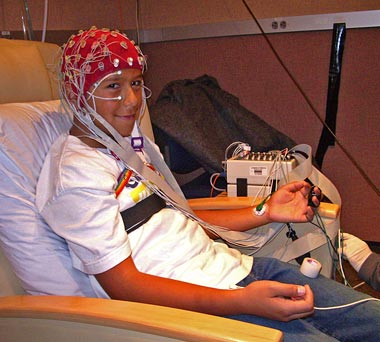
BERKELEY — University of California, Berkeley, researchers have shown for the first time that the brains of low-income children function differently from the brains of high-income kids.
In a study recently accepted for publication by the Journal of Cognitive Neuroscience, scientists at UC Berkeley's Helen Wills Neuroscience Institute and the School of Public Health report that normal 9- and 10-year-olds differing only in socioeconomic status have detectable differences in the response of their prefrontal cortex, the part of the brain that is critical for problem solving and creativity. -
07 Dec 08
-
06 Dec 08





Would you like to comment?
Join Diigo for a free account, or sign in if you are already a member.