
This link has been bookmarked by 18 people . It was first bookmarked on 11 Oct 2008, by Suzanne Karako.
-
06 Jan 15
-
10 Mar 14
 sanad hajjiri
Designing concepts intro
-
Building construction and operations can have extensive direct and indirect impacts on the environment, society, and economy, which are commonly referred to as the 3 P's ('People', 'Planet', 'Pocketbook'). The field of sustainable design seeks to balance the needs of these areas by using an integrated approach to harmonize needs and create win-win-win design solutions.
-
sustainable design advocates commonly encourage retrofitting existing buildings rather than building anew. Retrofitting an existing building can often be more cost-effective than building a new facility. Designing major renovations and retrofits for existing buildings to include sustainable design attributes reduces operation costs and environmental impacts, and can increase building resiliency. The embodied energy of the existing building, a term expressing the cost of resources in both human labor and materials consumed during the building's construction, will be squandered if the building is allowed to decay or be demolished.
-
-
28 Mar 12
 Richard Sickinger
The main objectives of sustainable design are to avoid resource depletion of energy, water, and raw materials; prevent environmental degradation caused by facilities and infrastructure throughout their life cycle; and create built environments that are livable, comfortable, safe, and productive.
-
18 Feb 12
-
Building construction and operation have extensive direct and indirect impacts on the environment. Buildings use resources such as energy, water and raw materials, generate waste
-
and emit potentially harmful atmospheric emissions
-
Building owners, designers and builders face a unique challenge to meet demands for new and renovated facilities that are accessible, secure, healthy, and productive while minimizing their impact on the environment.
-
Creating sustainable buildings starts with proper site selection,
-
. The location, orientation, and landscaping of a building affect the local ecosystems
-
Incorporate Smart growth principles in the project development process, whether it be a single building, campus or military base.
-
Use Environmentally Preferable Products
A sustainable building is constructed of materials that minimize life-cycle environmental impacts such as global warming, resource depletion, and human toxicity. Environmentally preferable materials have a reduced effect on human health and the environment -
Enhance Indoor Environmental Quality (IEQ)
-
a sustainable building maximizes daylighting; has appropriate ventilation and moisture control; and avoids the use of materials with high-VOC emissions.
-
-
09 Aug 11
-
12 Feb 11

-
13 Jan 11
-
11 Sep 10
-
13 Jul 10
-
While the definition of sustainable building design
-
While the definition of sustainable building design
-
While the definition of sustainable building design is constantly changing, six fundamental
-
While the definition of sustainable building design
-
by the WBDG Sustainable Committee
Last updated: 06-02-2010
-
Overview
Building construction and operation have extensive direct and indirect impacts on the environment. Buildings use resources such as energy, water and raw materials, generate waste (occupant, construction and demolition) and emit potentially harmful atmospheric emissions. Building owners, designers and builders face a unique challenge to meet demands for new and renovated facilities that are accessible, secure, healthy, and productive while minimizing their impact on the environment.
-
Considering the current economic challenges, retrofitting an existing building can be more cost effective than building a new facility. Designing major renovations and retrofits for existing buildings to include sustainability initiatives reduces operation costs and environmental impacts, and can increase building resiliency.
-
Protect and Conserve Water
In many parts of the country, fresh water is an increasingly scarce resource. A sustainable building should reduce, control, and/or treat site runoff, use water efficiently, and reuse or recycle water for on-site -
- Optimize Site/Existing Structure Potential
Creating sustainable buildings starts with proper site selection, including consideration of the reuse or rehabilitation of existing buildings. The location, orientation, and landscaping of a building affect the local ecosystems, transportation methods, and energy use. Incorporate Smart growth principles in the project development process, whether it be a single building, campus or military base. Siting for physical security is a critical issue in optimizing site design, including locations of access roads, parking, vehicle barriers, and perimeter lighting. Whether designing a new building or retrofitting an existing building, site design must integrate with sustainable design to achieve a successful project. - Optimize Energy Use
With America's supply of fossil fuel dwindling, concerns for energy independence and security increasing, and the impacts of global climate change arising, it is essential to find ways to reduce load, increase efficiency, and utilize renewable energy resources in federal facilities. - Protect and Conserve Water
In many parts of the country, fresh water is an increasingly scarce resource. A sustainable building should reduce, control, and/or treat site runoff, use water efficiently, and reuse or recycle water for on-site use, when feasible. - Use Environmentally Preferable Products
A sustainable building is constructed of materials that minimize life-cycle environmental impacts such as global warming, resource depletion, and human toxicity. Environmentally preferable materials have a reduced effect on human health and the environment and contribute to improved worker safety and health, reduced liabilities, reduced disposal costs, and achievement of environmental goals. - Enhance Indoor Environmental Quality (IEQ)
The indoor environmental quality (IEQ) of a building has a significant impact on occupant health, comfort, and productivity. Among other attributes, a sustainable building maximizes daylighting; has appropriate ventilation and moisture control; and avoids the use of materials with high-VOC emissions. Additionally, consider ventilation and filtration to mitigate chemical, biological, and radiological attack. - Optimize Operational and Maintenance Practices
Considering a building's operating and maintenance issues during the preliminary design phase of a facility will contribute to improved working environments, higher productivity, reduced energy and resource costs, and prevented system failures. Encourage building operators and maintenance personnel to participate in the design and development phases to ensure optimal operations and maintenance of the building. Designers can specify materials and systems that simplify and reduce maintenance requirements; require less water, energy, and toxic chemic
Recent answers to this challenge call for an integrated, synergistic approach that considers all phases of the facility life cycle. This approach, often called "sustainable design," supports an increased commitment to environmental stewardship and conservation, and results in an optimal balance of cost, environmental, societal, and human benefits while meeting the mission and function of the intended facility or infrastructure.
The main objectives of sustainable design are to avoid resource depletion of energy, water, and raw materials; prevent environmental degradation caused by facilities and infrastructure throughout their life cycle; and create built environments that are livable, comfortable, safe, and productive.
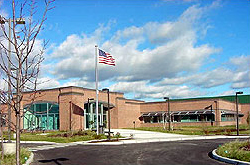
EPA's New England Regional Laboratory (NERL) achieved a LEED Version 1.0 Gold rating. From conception the project was charged to "make use of the best commercially-available materials and technologies to minimize consumption of energy and resources and maximize use of natural, recycled and non-toxic materials." Chelmsford, MA
While the definition of sustainable building design is constantly changing, six fundamental principles persist.
- Optimize Site/Existing Structure Potential
-
als and cleaners to maintain; and are cost-effective and reduce life-cycle costs. Additionally, design facilities to include meters in order to track the progress of sustainability initiatives, including reductions in energy and water use and waste generation, in the facility and on site.
-
-
29 Oct 09
-
11 Jan 09
-
11 Oct 08


Would you like to comment?
Join Diigo for a free account, or sign in if you are already a member.