
This link has been bookmarked by 272 people . It was first bookmarked on 22 Jul 2006, by someone privately.
-
29 Mar 17
-
15 Mar 17
-
27 Jan 17
-
After receiving evidence during a five-day hearing, U.S. Magistrate Judge Michael R. Merz ruled on January 26 that Ohio's lethal injection process will create a substantial and objectively intolerable risk of serious harm in violation of the Eighth Amendment
-
-
01 Dec 16
 text audio
Trägt Informationen zu Todesstrafen in den USA zusammen. Filterbar nach Bundesstaat, Jahr, Hinrichtungsart und weiteren Kriterien.
-
09 Nov 16
-
Nebraskans voted in favor of the death penalty by a margin of 61%-39%, casting 443,506 "repeal" votes on Referendum 426 to overturn the legislature's abolition of the death penalty, against 280,587 "retain" votes to keep the legislative repeal in place.
-
In Oklahoma, voters by a nearly 2-1 margin approved State Question 776, which constitutionalizes the state legislature's power to adopt any execution method not prohibited by the U.S. Constitution and prevents Oklahoma's state courts from declaring the death penalty cruel and unusual punishment.
-
-
27 Oct 16
-
2016 poll and did not ask respondents which punishment they found more appropriate for murder: the death penalty or life without parole. Polling this year in California, Florida, Kentucky, Louisiana, and Oklahoma indicates that, when asked that policy question, more Americans favor life without parole over the death penalty.
-
Sherman Brown (pictured), a man who was sentenced to death in Virginia in 1970 for the murder of a 4-year-old boy, has filed a writ of actual innocence with the Virginia Supreme Court saying that DNA testing on recently discovered evidence clears him of the crime
-
"Healing is a process, not an event.” A 2012 Marquette University Law School study reported that co-victims had improved physical and psychological health and greater satisfaction with the legal system in cases where perpetrators received life sentences, rather than death sentences. The authors of that study said co-victims, "may prefer the finality of a life sentence and the obscurity into which the defendant will quickly fall, to the continued uncertainty and publicity of the death penalty
-
n article for the University of Michigan Journal of Law Reform by Professor Michael Radelet of the University of Colorado at Boulder describes the retributive effects of the death penalty on the family, friends, and attorneys of death row priso
-
-
10 Oct 16
 Michael Rackett
The Death Penalty Information Center is a national non-profit organization serving the media and the public with analysis and information on issues concerning capital punishment. Founded in 1990, the Center promotes informed discussion of the death penalty by preparing in-depth reports, conducting briefings for journalists, and serving as a resource to those working on this issue.
-
21 Sep 16

-
26 Mar 16
-
Fewer than a quarter (24%) of the state's death sentences imposed since 1976 have resulted in execution, while more than half (52%) have been overturned.
-
-
18 Mar 16
-
17 Mar 16
 megriley3300
failed execution
-
Ohio first tried to execute Broom on September 15, 2009, but the attempt was called off after two hours of unsuccessful efforts by executioners to establish a viable IV line. Despite attempting to insert the IV in 18 different sites on Broom's arms and legs, prison personnel failed to find a suitable vein, and in one case instead struck bone.
-
he event was not a failed execution because setting the IV line was only a "preliminary step" to an execution and the execution itself "commences when the lethal drug enters the IV line."
-
because the attempt did not proceed to the point of injection of a lethal drug into the IV line, jeopardy never attached."
-
Pfeifer points to the misconduct in Keenan's case as a reason why the death penalty should be abolished: "If he had been executed, there would have been no way for the state to cleanse itself from the awful reality of having executed a person who had not received his full measure of legal protection. To ensure that never happens, the Ohio Legislature should – in my opinion – abolish the death penalty."
-
argued that the risk of wrongful convictions is too great to continue using the death penalty.
-
ackson, who was sentenced to death and spent 39 years wrongfully incarcerated before his 2014 exoneration, said "The fact that we too often send innocent people to death row in this country can no longer be debated. I ought to know. I was one of them."
-
ackson recently appeared at a Democratic town hall debate at which he asked Presidential candidate Hillary Clinton how one could support capital punishment knowing about stories like his. Clinton called Jackson's case "a travesty," but said she continues to believe the federal death penalty should be available for cases of mass killings or terrorism.
-
when an intense pressure to convict is present, that is when the risk of convicting an innocent is greatest."
-
Darryl Hunt
-
Hunt was wrongfully convicted of the 1984 rape and murder of Deborah Sykes, a newspaper copy editor.
-
In 1994, a DNA test excluded him as the perpetrator of the crime, but it took another 10 years of appeals before he was released in 2004.
-
"A system that can perpetrate an injustice like this has no business deciding life and death. If I had gotten a death sentence, there’s no doubt in my mind, I would have been executed.”
-
The U.S. Supreme Court has held that defendants with intellectual disability (formerly referred to as "mental retardation") are exempt from the death penalty.
-
he Lexington Herald-Leader, Kentucky's second-largest newspaper, announced it was ending its long-held support for the death penalty, and now believes the state legislature should abolish capital punishment.
-
the Herald-Leader said the system was "rife with injustices and the potential for error."
-
It quoted Dr. Allen Ault, who oversaw executions in Georgia, and who said, "I do not know one [correctional officer] who has not experienced a negative impact," noting an increased risk of depression, substance abuse, and suicide.
-
-
23 Feb 16
-
In an address at the Vatican on February 21, Pope Francis (pictured) broadened his call for a global end to capital punishment and urged Catholic leaders around the world to take action to halt all executions during the Church's ongoing "Holy Year of Mercy."
-
"A World Without the Death Penalty," hosted in Rome by the Community of Sant'Egidio, a Catholic organization that opposes capital punishment. Francis said, "The commandment ‘You shall not kill’ has absolute value, and covers both the innocent and the guilty. ... [E]ven the criminal keeps the inviolable right to life, a gift from God."
-
he Virginia House of Delegates has approved a bill authorizing the use of the electric chair for executions if lethal injection drugs are unavailable. A similar bill passed the House in 2014 but was rejected by the State Senate
-
United States Supreme Court Associate Justice Antonin Scalia, one of the Court's most ardent defenders of the constitutionality of capital punishment, has died at age 79. Appointed to the Court in 1986 by President Ronald Reagan, Justice Scalia voted to uphold the application of the death penalty in a wide variety of circumstances. He was part of 5-4 conservative majorities in a number of significant death penalty cases, including the 1987 decisions in McCleskey v. Kemp severely limiting the ability of capital defendants to obtain relief for race discrimination in the application of the death penalty and in Tison v. Arizona permitting the execution of offenders who neither killed nor intended that a killing take place, but exhibited reckless indifference to human life.
-
U.S. District Court Judge Geoffrey Crawford has ordered an evidentiary hearing on Donald Fell's (pictured) challenge to the constitutionality of the federal death penalty. In court filings seeking to bar federal prosecutors from seeking death against him in a pending retrial, Fell has argued that the federal death penalty constitutes cruel and unusual punishment in violation of the Fifth and Eighth Amendments to the U.S. Constitution.
-
-
03 Feb 16
-
Missouri has paid state executioners $284,551.84 in cash since November 2013
-
Missouri legislature, saying, "It is my understanding that giving 1099s to these individuals would reveal who they were, and would mean the end of the death penalty, because these individuals wouldn’t do it."
-
BuzzFeed found evidence that Arizona and Oklahoma also make cash payments to executioners in the interest of concealing their identities, but Arizona has supplied the appropriate tax forms and Oklahoma's payments may be below the threshold required for issuing 1099s.
-
On January 17, 2006, California executed Clarence Ray Allen, who was 76 years old, legally blind, diabetic, and used a wheelchair. He was the last person the state has executed.
-
A decade later, California's death row population has increased by 100 to 746, making it the largest in the nation
-
The state has executed 13 prisoners in 40 years
-
. Prisoners wait 11-15 years to be appointed counsel, and the entire appeal process routinely takes 20-25 years.
-
. A prior referendum to abolish the death penalty failed 48% to 52% in 2012.
-
Commentators close to the issue say California's death penalty isn't working. Jeanne Woodford, who worked at San Quentin for over 25 years and oversaw executions, said that many of those who were sentenced to death were young men
-
who wrote the initiative that expanded California's death penalty in 1978, said he did so based upon two assumptions about the death penalty that have proven to be false: "The first was that it would deter murders. The second: I assumed defendants would have competent representation."
-
"the very people whose behavior changes over time." Donald Heller,
-
He also voiced concerns about the potential execution of innocent people: "If you have an imperfect system taking someone's life, it's a little bit frightening."
-
-
17 Dec 15
-
The death penalty declined by virtually every measure in 2015. 28 people were executed, the fewest since 1991.
-
Arizona officials have agreed not to schedule any executions until a federal court challenge to the state's lethal injection protocol and secrecy policy is resolved.
-
-
24 Nov 15
-
Andrew Brannan, a decorated Vietnam veteran with bi-polar disorder who was declared 100% disabled by the Veterans Administration as a result of combat-related PTSD, was executed in January, the first U.S. execution in 2015. The jury was never heard details of Brannan's military service or disability.
-
n light of the FBI's acknowledgement in April that flawed forensic testimony by its expert hair-comparison analysts had
-
ainted at least 268 cases, including 32 death penalty cases, forensic science is coming under increased scrutin
-
-
29 Oct 15
 astabley205
Summary:
This is mainly an information website that keeps up to date information on the Death Penalty. it goes over recent and current issues, as well as facts, and resources.
This website will give me a lot of information I can use to support my thesis. This is where i will gather most of my statistics and data to support my belief. I plan to use this website as one of my main sources to inform my readers, as well as back up certain issues in my paper.
This I believe is a credible resource. The DPIC is a non profit organization that's purpose is to educate, and provide information on the Death Penalty. The Death Penalty Information Center was ranked among the Top Criminal Justice Nonprofits by Philanthropedia in 2011. DPIC's online curricula has received a variety of awards for contributions to educational excellence. -
15 Oct 15
-
08 Oct 15
-
Eight death-row prisoners whom Arkansas has scheduled to be executed in the next four months have asked a judge to issue a preliminary injunction that would put their executions on hold.
-
-
01 Sep 15
-
20 Jul 15
 sgoldmanlib
A non-profit organization serving the media and the public with analysis and information on issues concerning capital punishment. Includes fact sheets, reports and data for students and other researchers.
capital punishment death penalty criminal justice law crime politics debate laws
-
16 Apr 15
-
Curley said he believes Tsarnaev should receive life without parole because a death sentence would mean
-
endless appeals, but a life sentence would mean he would, "go away never to be heard from again."
-
-
19 Mar 15
-
26 Feb 15
-
24 Feb 15
 joannanelson
DPIC | Death Penalty Information Center
-
-
te seeks the penalty of
-
unendurable
-
-
07 Jan 15
-
[W]hile the death penalty may be increasingly infrequent, it is all too often a brutal end to a brutal life....The people executed in recent years were not the 'worst of the worst' — as many death-penalty advocates like to imagine — but those who were too poor, mentally ill or disabled to avoid it."
-
-
17 Dec 14
-
a series of articles analyzing Pennsylvania's death penalty, the Reading Eagle found that
-
-
16 Oct 14
-
Pennsylvania reached a new milestone with the 250th death-sentence reversal since the death penalty was reinstated in 1978. The state has imposed approximately 412 death sentences since reinstatement.
-
-
08 Sep 14
-
29 Jul 14
-
09 May 14
-
overnors and legislatures in banning executions, recognizing that the American administration of death does not function." The editors noted the Oklahoma Supreme Court's temporary halt to the execution and pointed to political pressure as a possible explanation for why the Court then allowed it to go forward: "
-
Only 28% of respondents chose the death penalty. Life without parole was the most popular option, receiving 39% support, while life with the possibility of parole was second with 29%.
-
yler's co-defendant, Leroy Head, confessed to the crime but testified that Tyler was the triggerman, securing himself a lesser sentence. Head was released from prison in 2008. McGinty cited Head's "evolving statements" as a "cause for concern" in asking for clemency for Tyler, and the Parole Board agreed, adding that a sentence with parole eligibility, "would also make Tyler’s sentence more proportionate to the sentence imposed upon Head."
-
-
22 Apr 14
 carolinecummings
Research paper
-
20 Apr 14
-
21 Mar 14

Anyone interested in information on the death penalty or capital punishment issues will find this website fascinating. Here is a wealth of statistics on every aspect imaginable. There's an "execution database" that's current up and into 2009; a state-by-state section that lists such statistics such as if the state has the death penalty, its current death row population, and its total number of executions; and a huge section on murder rates. Recent legislation, sentencing and the U.S. Supreme Court also warrant their own areas.
-
12 Mar 14
 Phillippa Norton
All you need to know about the death penalty and its effects. Main website to then search through.
-
27 Feb 14
-
urors in Washington are three times more likely to recommend a death sentence for a black defendant
-
than for a white defendant in a similar case.
-
-
26 Feb 14
-
According to a recent study by Professor Katherine Beckett of the University of Washington, jurors in Washington are three times more likely to recommend a death sentence for a black defendant than for a white defendant in a similar case.
-
Nicholas Brown, general counsel to Washington Governor Jay Inslee, said, "It's positive to see that prosecutors aren't unfairly considering race in making decisions about when to seek capital punishment. At the same time, it brings up a lot of unfortunate implications about juries." The study examined 285 cases in which defendants were convicted of aggravated murder. The cases were analyzed for factors that might influence sentencing, including the number of victims, the prior criminal record of the defendant, and the number of aggravating factors alleged by the prosecutor. Gov. Inslee recently placed a
-
"Death Row Stories" is a new 8-part series premiering on March 9 on CNN that will examine actual death penalty cases.
-
County administrators in Washington state say a single death penalty case could cause bankruptcy in their county. Court costs are paid at a county level, meaning a lengthy and expensive death penalty trial can seriously threaten the county's ability to pay for other priorities.
-
“If we had a death penalty case, and had to pay $1 million (in legal costs), we’d go bankrupt.”
-
Last year, the $1 million cost of a death penalty retrial caused a "budget emergency" in Clallam County.
-
BOOKS: "The Wrong Carlos" Argues Texas Executed an Innocent Man
-
Support for the death penalty has fallen sharply by 23 percentage points since 1996, reaching its lowest level in almost two decades, according to a recent poll by the Pew Research Center.
-
The 2013 poll also found a 10 point drop in just the last 2 years in respondents who say they "strongly favor" the death penalty, from 28% to 18%
-
. The percentage of Americans who say they oppose the death penalty has risen to 37%. In 2011, Pew asked respondents about the reasons behind their views on the death penalty, finding that the top two reasons for opposition to capital punishment were the imperfect nature of the justice system and a belief that the death penalty is immoral. The drop in public support coincides with an overall decline in use of the death penalty during the same time period, with both death sentences and executions falling dramatically since the 1990s. Six states have repealed the death penalty in the last six years, and three governors have recently imposed moratoriums on executions.
-
-
21 Feb 14
-
County administrators in Washington state say a single death penalty case could cause bankruptcy in their county.
-
Administrative Association, said several counties told him, “If we had a death penalty case, and had to pay $1 million (in legal costs), we’d go bankrupt.”
-
Last year, the $1 million cost of a death penalty retrial caused a "budget emergency" in Clallam County.
-
-
05 Jan 14
-
13 Dec 13
-
14 Nov 13
-
As states try to secure the drugs for carrying out lethal injections, they are increasingly resorting "to secrecy and backup execution protocols necessitated by drug shortages instead of treating those condemned to death with the dignity appropriate to any human life," according to a recent article in the Crime Report by Richard Dieter, Executive Director of the Death Penalty Information Center. The article described a number of desperate measures taken by states, such as secretly obtaining drugs from questionable sources overseas, designating a pharmacy as part of the "execution team" to hide its identity, and trying drugs never used before in executions. The article traces the history of lethal injections, culminating in the refusal of many drug companies to allow their products to be used in executions. On November 12, Florida will employ a risky 3-drug procedure, including a critical sedative only used once before in an execution. On November 14, Ohio intends to use a new injection process never tried before in U.S. executions.
-
Medical experts are concerned that untried lethal injection procedures in some states could cause prolonged, painful deaths. Ohio will try a procedure never used before in an execution on November 14 when it plans to inject a combination of the sedative midazolam and the painkiller hydromorphone. According to Dr. Jonathan Groner, a professor of clinical surgery at Ohio State University College of Medicine, a hydromorphone overdose can cause painful side effects, including an extreme burning sensation, seizures, hallucination, panic attacks, vomiting, and muscle pain. He said, "You're basically relying on the toxic side effects to kill people while guessing at what levels that occurs." Groner added, if the hydromorphone IV is set poorly, "it would be absorbed under the skin, subcutaneously, very slowly, and that death could be extremely prolonged…It may be painful, and it may take forever." Doctors also raised concerns about Missouri's planned use of pentobarbital from a compounding pharmacy. Compounding pharmacies are not regulated by the Food and Drug Administration, and drugs from one such pharmacy caused a deadly outbreak of fungal meningitis in 2012. David Waisel, an associate professor of anesthesiology at Harvard Medical School, said that contaminated pentobarbital could cause a sensation similar to rubbing an open wound with sandpaper. Florida was the first state to use midazolam, although it employed different secondary drugs than Ohio. In an October 15 execution, the inmate appeared to remain conscious longer than usual and made movements after losing consciousness.
-
-
12 Nov 13
-
Former President Jimmy Carter
-
Gregg v. Georgia (1976)
-
“In America today, if you have a good attorney you can avoid the death penalty; if you are white you can avoid it; if your victim was a racial minority you can avoid it. But if you are very poor or mentally deficient, or the victim is white, that’s the way you get sentenced to death.”
-
“It’s time for the Supreme Court to look at the totality of the death penalty once again. My preference would be for the court to rule that it is cruel and unusual punishment, which would make it prohibitive under the US constitution.”
-
and death sentence of Roy Swafford (pictured), who has been on death row since 1988.
-
It may be painful, and it may take forever.
-
cause a sensation similar to rubbing an open wound with sandpaper.
-
-
28 Aug 13
-
03 Jun 13
-
15 May 13
 Lathen S
there are facts about the deth penalty that helped me with my reasearch
-
08 May 13
-
24 Apr 13
-
23 Apr 13
-
22 Apr 13
 Carson R
I used this as a source
-

-
19 Apr 13
-
02 Apr 13
 tylermjones
Death penatly research
-
06 Mar 13
-
05 Mar 13

-
21 Feb 13
-
05 Feb 13
-
01 Feb 13

-
31 Jan 13

-

-

-
19 Jan 13
 William Joiner
Good overall site which covers the latest news involving capital punishment
-
14 Jan 13
-
The Death Penalty Information Center is pleased to offer a new resource page on death sentences in 2012. Seventy-seven (77) people were sentenced to death in 2012, the second lowest number of sentences since the death penalty was reinstated in 1976. Of those sentenced, 3 were women; 48% were black; 40% were white. Four states (FL, CA, TX, and PA) were responsible for 66% of the death sentences, and only 9 counties produced over a third of the death sentences in the country. Information is provided on the name, race, state, and county for each defendant. A downloadable spreadsheet enables sorting by each of these categories. Click here for our Death Sentences in 2012 page.
-
-
10 Jan 13
 Mark Morozumi
Some information on the death penalty posted jan 9 2013
-
 Kelsey Rhum
its about death penilities
-
On January 8, the U.S. Supreme Court unanimously rejected indefinite delays in the federal review of
-
death penalty cases when inmates are mentally incompetent to assist their attorneys. Writing for the Court, Justice Clarence Thomas said such appeals are usually based on established facts, not requiring further input from the defendant. “Given the backward-looking, record-based nature of most federal habeas proceedings, counsel can generally provide effective representation to a habeas petitioner regardless of the petitioner’s competence,” he said. “Attorneys are quite capable of reviewing the state-court record, identifying legal errors, and marshaling relevant arguments, even without their clients’ assistance.” The opinion consolidated the cases of Ryan v. Gonzales (Arizona) and Tibbals v. Carter (Ohio). In Carter's case, the Court left open the window for a temporary stay if his appeals rely on evidence outside the court record and if he might regain competence. “If a district court concludes that [Carter’s] claim could substantially benefit from the petitioner’s assistance, the district court should take into account the likelihood that the petitioner will regain competence in the foreseea
-
future,” Thomas wrote. “Where there is no reasonable hope of competence, a stay is inappropriate and merely frustrates the state’s attempts to defend its presumptively valid judgment.”
-
his recent Sidebar column, Adam Liptak, Supreme Court reporter for the New York Times, discussed the plight that Alabama death row inmate Ronald Smith suffered at the hands of a drug-addicted lawyer and an unsympathetic court. In December, the U.S. Court of Appeals for the Eleventh Circuit ruled that Smith could not challenge his conviction and sentence because his lawyer failed to properly file his post-conviction appeal. However, as Liptak explained, the court did not "place much weight on the fact that the lawyer himself was on probation for public intoxication and addicted to crystal methamphetamine while he was being less than punctilious. In the months that followed, the lawyer would be charged with drug possession, declare bankruptcy and commit suicide." Smith did have a second lawyer, but he was in Tennessee and not authorized to practice in Alabama. Judge Rosemary Barkett (pictured) of the 11th Circuit dissented, saying clients should not be blamed for their lawyers’ mistakes, especially since clients on death row have no role in the selection of their lawyers and have no control over them. “It is unjust and inequitable,” she wrote, “to require death row inmates to suffer the consequences of their attorneys’ negligence.” Last year, the U.S. Supreme Court commented on the quality of Alabama’s death penalty system: “Nearly alone among the states, Alabama does not guarantee representation to indigent capital defendants in post-conviction proceedings. On occasion, some prisoners sentenced to death receive no post-conviction representation at all.”
-
-
09 Jan 13
-
As legislative sessions begin across the country, legislators in several states have proposed bills to abolish or reform the death penalty in 2013. In Alabama, Sen. Hank Sanders will introduce bills to abolish the death penalty, or alternatively to institute a series of reforms. “I believe the death penalty is not only unproductive but counter-productive,” he said. Texas will also consider a number of death penalty reform bills, including restrictions on certain types of evidence, and the creation of an innocence commission. Colorado Sen. Claire Levy is drafting a bill to abolish the death penalty. "We have increasing concerns about the possibility of executing an innocent person," said Levy. Kentucky Rep. Carl Rollins plans to propose a bill to replace the death penalty with a sentence of life without parole. In Maryland, Gov. Martin O'Malley has voiced support for a bill to end the death penalty and direct some of the money saved to murder victims' families. New Hampshire's Gov. Margaret Hassan also supports abolition, and a bill is likely to be introduced in that state. In Oregon, where Gov. John Kitzhaber instituted a moratorium on executions for the remainder of his term, Rep. Mitch Greenlick plans to introduce a bill beginning the process of abolishing the death penalty.
-
Arkansas has not had an execution since 2005, and has only sentenced one new person to death in the last two years. In 2012, the Arkansas Supreme Court struck down the state’s execution law after finding problems with how the lethal injection drugs used in executions were selected.
-
A recent Gallup Poll measured Americans' abstract support for the death penalty at 63%, the second-lowest level of support for capital punishment since 1978, and a significant decline from 1994, when 80% of respondents were in favor of the death penalty.
-
Seventy-seven (77) people were sentenced to death in 2012, the second lowest number of sentences since the death penalty was reinstated in 1976.
-
Of those sentenced, 3 were women; 48% were black; 40% were white.
-
Four states (FL, CA, TX, and PA) were responsible for 66% of the death sentences
-
and only 9 counties produced over a third of the death sentences in the country.
-
-
22 Dec 12
-
18 Dec 12
-
-
He pointed to the high costs of capital cases, the time required to prosecute, and the randomness of its application as major concerns: "Prosecuting a death penalty case through a verdict in the trial court can cost the prosecution well over $1 million dollars .... my total operating budget for this office is $4.6 million and with that budget we prosecute 1,900 felonies, per year."
-
. Applying North Carolina's revised Racial Justice Act, Judge Weeks relied partially on studies showing prosecutors struck qualified African-American jurors twice as often as other potential jurors, both in Cumberland County and statewide.
-
-
16 Dec 12
-
(52-48%) vote in November on California’s Proposition 34 to end capital punishment
-
millions wasted on this broken system would be much
-
The final ruling came ten years after the U.S. Supreme Court held in Atkins v. Virginia (2002) that it was unconstitutional to execute defendants with mental retardation.
-
-
29 Nov 12
-
26 Nov 12

-
death
-
end of the death penalty in New Hampshire
-
state’s death row
-
death
-
November 19, 110 countries voted for a resolution at the United Nations General Assembly
-
39 countries opposing the non-binding
-
Thirty-six countries abstained
-
141 are abolitionist
-
57 countries retain the death penalty
-
$1.6 million per inmate
-
implementing the death penalty in Utah.
-
-
21 Oct 12
 Alexandra Grover
for final soc
-
inconceivable” that Ferguson would have received all those years of psychotropic medications and clinical treatment “were he not a diagnosed paranoid schizophrenic.” However, Judge Glant rejected Ferguson’s request for a stay of execution because, “[r]egardless of his long history of mental illness, there is no evidence that he does not understand what is taking place and why it is taking place.” As early as 1965, court records indicated
-
On October 17, the Kentucky Commission on Human Rights , a state agency that enforces civil rights, unanimously passed a resolution in favor of ending the death penalty. The Commission urged the Kentucky General Assembly to repeal the death penalty and Governor Steven Beshear to sign any such legislation that is brought before him. The resolution underscored the unfairness of capital punishment:
“[S]tatistics confirm that the imposition of the death penalty is disproportionately imposed on minorities and the poor ." Moreover, the resolution pointed to the high error rate in Kentucky capital cases: "Since 1976, when Kentucky reinstated the death penalty, 50 of the 78 people sentenced to death have had their death sentence or conviction overturned, due to misconduct or serious errors that occurred during their trial . This represents an unacceptable error rate of more than 60 percent .” The resolution will be given to each legislator and to the governor. -
it is inconceivable” that Ferguson would have received all those years of psychotropic medications and clinical treatment “were he not a diagnosed paranoid schizophrenic.” However, Judge Glant rejected Ferguson’s request for a stay of execution because, “[r]egardless of his long history of mental illness, there is no evidence that he does not understand what is taking place and why it is taking place.” As early as 1965, court records indicated that Ferguson was having “visual hallucinations.” One doctor said Ferguson “did not
-
it is inconceivable” that Ferguson would have received all those years of psychotropic medications and clinical treatment “were he not a diagnosed paranoid schizophrenic.” However, Judge Glant rejected Ferguson’s request for a stay of execution because, “[r]egardless of his long history of mental illness, there is no evidence that he does not understand what is taking place and why it is taking place.” As early as 1965, court records indicated that Ferguson was having “visual hallucinations.” One doctor said Ferguson “did not know right from wrong nor the nature and consequences of his acts.” A psychological diagnosis in 1975 warned that Ferguson “has a long-
-
On October 17, the Kentucky Commission on Human Rights, a state agency that enforces civil rights, unanimously passed a resolution in favor of ending the death
-
“[S]tatistics confirm that the imposition of the death penalty is disproportionately imposed on minorities and the poor
-
high error rate in Kentucky capital cases:
-
50 of the 78 people sentenced to death have had their death sentence or conviction overturned, due to misconduct or serious errors that occurred during their trial
-
error rate of more than 60 percent
-
George Gascon served for 30 years as a police officer , including as a police chief in Arizona and California. He is currently the District Attorney of San Francisco . Although he formerly supported the death penalty, he now believes it should be replaced with life without parole . In a recent op-ed in the Sacramento Bee, Gascon wrote: “I have had the opportunity to observe and participate in the development and implementation of public safety policies at every level. I have seen what works and what does not in making communities safe. Given my experience, I believe there are three compelling reasons why the death penalty should be replaced. (1) The criminal justice system makes mistakes and the possibility of executing innocent people is both inherently wrong and morally reprehensible; (2) My personal experience and crime data show the death penalty does not reduce crime; and (3) The death penalty wastes precious resources that could be best used to fight crime and solve thousands of unsolved homicides languishing in filing cabinets in understaffed police departments across the state." He concluded the death penalty is "fatally flawed" and "broken beyond repair.” Read the full op-ed below.
-
George Gascon served for 30 years as a police officer
-
District Attorney of San Francisco
-
replaced with life without parole
-
(1) The criminal justice system makes mistakes and the possibility of executing innocent people is both inherently wrong
-
The death penalty wastes precious resources that could be best used to fight crime and solve thousands of unsolved homicides
-
My personal experience and crime data show the death penalty does not reduce crime;
-
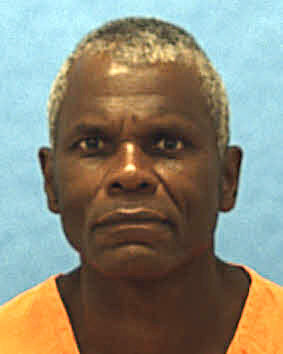
On October 12, Judge David Glant rejected a request from attorneys for Florida death row inmate John Ferguson (pictured) to halt his execution, despite acknowledging that Ferguson has severe mental illness. The judge wrote that Ferguson’s “documented history of paranoid schizophrenia ” was “credible and compelling,” and that “it is inconceivable” that Ferguson would have received all those years of psychotropic medications and clinical treatment “were he not a diagnosed paranoid schizophrenic.” However, Judge Glant rejected Ferguson’s request for a stay of execution because, “[r]egardless of his long history of mental illness, there is no evidence that he does not understand what is taking place and why it is taking place.” As early as 1965, court records indicated that Ferguson was having “visual hallucinations.” One doctor said Ferguson “did not know right from wrong nor the nature and consequences of his acts.” A psychological diagnosis in 1975 warned that Ferguson “has a long-standing, severe illness which will most likely require long-term inpatient hospitalization” and that he was “dangerous and cannot be released under any circumstances.” Ferguson was released the following year and committed a series of murders. Now, 35 years later, he is scheduled to be executed on October 18. UPDATE: A new execution date has been set for Oct. 23, following the Florida Supreme Court's denial of Ferguson's appeal.
-
On October 12, Judge David Glant rejected a request from attorneys for Florida death row inmate John Ferguson (pictured) to halt his execution, despite acknowledging that Ferguson has severe mental illness. The judge wrote that Ferguson’s “documented history of paranoid schizophrenia ” was “credible and compelling,” and that “it is inconceivable” that Ferguson would have received all those years of psychotropic medications and clinical treatment “were he not a diagnosed paranoid schizophrenic.” However, Judge Glant rejected Ferguson’s request for a stay of execution because, “[r]egardless of his long history of mental illness, there is no evidence that he does not understand what is taking place and why it is taking place.” As early as 1965, court records indicated that Ferguson was having “visual hallucinations.” One doctor said Ferguson “did not know right from wrong nor the nature and consequences of his acts.” A psychological diagnosis in 1975 warned that Ferguson “has a long-standing, severe illness which will most likely require long-term inpatient hospitalization” and that he was “dangerous and cannot be released under any circumstances.” Ferguson was released the following year and committed a series of murders. Now, 35 years later, he is scheduled to be executed on October 18. UPDATE: A new execution date has been set for Oct. 23, following the Florida Supreme Court's denial of Ferguson's appeal.
-
 On October 12, Tennessee Judge James Beasley Jr. (pictured) overturned the conviction and death sentence of Michael Rimmer because critical evidence, not presented at his trial, throws doubt on Rimmer's guilt
 -
 On October 12, Judge David Glant rejected a request from attorneys for Florida death row inmate John Ferguson (pictured) to halt his execution, despite acknowledging that Ferguson has severe mental illness. The judge wrote that Ferguson’s “documented history of paranoid schizophrenia
 -
Ohio's botched attempt to execute Broom by lethal injection in 2009
-
- Read more
- 1269 reads
<!-- /node-inner, /node -->A newspaper's investigation into the costs of the death penalty in Florida revealed the state is spending as much as $1 million per inmate just for incarceration and appellate costs . Trial costs would add substantially to the state's total. Florida has over 400 inmates on death row. For example, keeping J.B. Parker under the special security of death row for 29 years has cost taxpayers $688,000; his appeals cost $296,000, for a total of $984,000. The total for Alfonso Cave has been $1,059,750. Both men remain on death row. Those figures do not include salaries for judges, prosecutors and clerks handling the cases. Shortening the appeals carries the risk of mistake. Neal Dupree, head of one of the appellate offices for death row inmates noted, "People need to know that just because someone has been convicted does not mean they are guilty," he said. Larry Spalding, who had been head of one of the appellate offices, added: "The most important thing we know about false convictions is that they happen and on a regular basis." Spalding said. "(Appellate) attorneys ... are trying to exonerate the innocent, and to prevent a wrongful execution. They should be admired, not excoriated." Florida has had more exonerations from death row (23) than any other state in the country.
NEW VOICES: Former Supporters Rethinking the Death Penalty Because of its High Costs
Posted: October 08, 2012
According to a recent article in the Wall Street Journal, some long-time supporters of the death penalty have recently shifted their positions, questioning whether the occasional execution is worth the costs incurred by taxpayers at a time when budgets are strained. Gil Garcetti (pictured), the former district attorney of Los Angeles County, which is responsible for roughly one-third of California 's 727 death-row inmates, recently remarked, “I was a supporter and believer in the death penalty, but I've begun to see that this system doesn't work and it isn't functional. It costs an obscene amount of money." A study of the death penalty in California in 2011 showed that the cost of housing a death-row inmate was $100,000 per year more than the cost of housing someone sentenced to life without parole. The same study concluded that just picking a jury in death penalty cases costs $200,000 more than the amount for non-capital cases. In Montana , a group called Montana Conservatives Concerned about the Death Penalty has joined the movement to repeal capital punishment because of its cost. Steve Dogiakos , the group’s director, said, “The death penalty is another institution of government that is wasteful and ineffective.” In Utah , Republican State Rep. Stephen Handy recently asked for a fiscal review of how much the state is spending on capital cases: "I don't have any illusion that either the Utah legislature or the people are ready to overturn the death penalty. But I want to start the dialogue," he said.
-
A newspaper's investigation into the costs of the death penalty in Florida revealed the state is spending as much as $1 million per inmate just for incarceration and appellate costs
-
According to a recent article in the Wall Street Journal, some long-time supporters of the death penalty have recently shifted their positions, questioning whether the occasional execution is worth the costs incurred by taxpayers at a time when budgets are strained. Gil Garcetti (pictured), the former district attorney of Los Angeles County, which is responsible for roughly one-third of California's 727 death-row inmates, recently remarked, “I was a supporter and believer in the death penalty, but I've begun to see that this system doesn't work and it isn't functional. It costs an obscene amount of money." A study of the death penalty in California in 2011 showed that the cost of housing a death-row inmate was $100,000 per year more than the cost of housing someone sentenced to life without parole. The same study concluded that just picking a jury in death penalty cases costs $200,000 more than the amount for non-capital cases. In Montana, a group called Montana Conservatives Concerned about the Death Penalty has joined the movement to repeal capital punishment because of its cost. Steve Dogiakos, the group’s director, said, “The death penalty is another institution of government that is wasteful and ineffective.” In Utah, Republican State Rep. Stephen Handy recently asked for a fiscal review of how much the state is spending on capital cases: "I don't have any illusion that either the Utah legislature or the people are ready to overturn the death penalty. But I want to start the dialogue," he said.
-
-
18 Oct 12
-
11 Oct 12
-
08 Oct 12
-
In Montana, a group called Montana Conservatives Concerned about the Death Penalty has joined the movement to repeal capital punishment because of its cost. Steve Dogiakos, the group’s director, said, “The death penalty is another institution of government that is wasteful and ineffective.”
-
-
12 Sep 12
-
10 Sep 12
-
14 May 12
 Alexander Zorro
Pág. Web en inglés con información general sobre la pena de muerte
-
10 May 12
-
$1.76 million.
-
cost the public nearly $1 million.
-
-
 Caitlyn J
DEATH PENALTY
-
07 May 12
-
19 Apr 12
-
15 Apr 12

-
A recent editorial in the New York Times called Connecticut's decision to repeal the death penalty part of "a growing movement against capital punishment."
-
Donald Heller (pictured), who wrote California's death penalty law, and Ron Briggs, who led the campaign to reinstate the law in 1978, are now advocating for replacing the death penalty with a sentence of life without parole. Both now say that the law did not have the result they intended.
-
-
12 Apr 12
-
06 Apr 12
-
30 Mar 12
-
22 Mar 12
-
24 Feb 12
-
23 Feb 12
-
08 Feb 12
-
07 Feb 12
-
04 Feb 12
 Tara Dillon
Updated information/articles on death penalty (states reviewing validity) and reviewing other cases: United States
-
03 Feb 12
-
02 Feb 12
-
15 Jan 12
-
09 Jan 12


Public Stiky Notes
Page Comments
Would you like to comment?
Join Diigo for a free account, or sign in if you are already a member.