
This link has been bookmarked by 11 people . It was first bookmarked on 02 Jul 2008, by ignt rn.
-
03 Aug 08
-
Extremophiles are organisms that can tolerate and even thrive in environments that will destroy most other living things
-
For reasons that are not entirely clear, many compounds which attack cancer cells are also harmful to brine shrimp, therefore most modern assay tests include the brine shrimp lethality test as a standard procedure.
-
-
10 Jul 08
-
and precipitate out. In addition, it pulls iron out of the water and sequesters it inside of itself. This makes it a classic example of an extremophile.
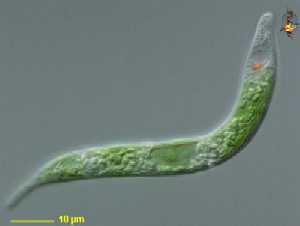 Euglena mutabilis
 -
Extremophiles are organisms that can tolerate and even thrive in environments that will destroy most other living things. Some can even repair their own damaged DNA, a trait which makes them extremely interesting to cancer researchers. The Stier
-
s. Shlepping around western Montana, the Stierles begged and borrowed time at other facilities while they doggedly processed the cultured organisms. Their tenacity led to the discovery of a number of promising chemicals. Three of these, berkeleydione, berkeleytrione, and Berkeley acid, came from species of the fungus Penicillium that had never been seen before, and were therefore named after the Berkeley Pit.
-
many compounds which attack cancer cells are also harmful to brine shrimp, therefore most modern assay tests include the brine shrimp lethality test
-
Further tests revealed that berkeleydione helped slow the growth of a type of lung cancer cell, and Berkeley acid went after ovarian cancer cells. All five were passed along to the National Cancer Institute for further study.
-
-
06 Jul 08
-
04 Jul 08
-
02 Jul 08


Would you like to comment?
Join Diigo for a free account, or sign in if you are already a member.