
This link has been bookmarked by 37 people . It was first bookmarked on 19 Jun 2008, by Alvin Tan.
-
13 Mar 11
-
29 Jun 10
-
05 Apr 10
-
05 Mar 10
-
28 Feb 10
-
24 Feb 10
 Hutch Carpenter
Where would we be without rating and reputation systems these days? Take them away, and we wouldn’t know who to trust on eBay, what movies to pick on Netflix, or what books to buy on Amazon. Reputation systems (essentially a rating system for people) also help guide us through the labyrinth of individuals who make up our social web. Is he or she worthwhile to spend my time on? For pity’s sake, please don’t check out our reputation points before deciding whether to read this article.
Rating and reputation systems have become standard tools in our design toolbox. But sometimes they are not well-understood. A recent post at the IxDA forum showed confusion about how and when to use rating systems. Much of the conversation was about whether to use stars or some other iconography. These can be important questions, but they miss the central point of ratings systems: to manage risk.
So, when we think about rating and reputation systems, the first question to ask is not, “Am I using stars, bananas, or chili peppers?” but, “what risk is being managed?” -
02 Jan 10
-
17 Jun 09
-
iconography
-
desire certainty in our transactions
-
risk, most simply (and broadly), arises when a transaction has a number of possible outcomes
-
multi-dimensional rating system
-
-
05 May 09
-
10 Sep 08
-
03 Sep 08
-
26 Aug 08
-
20 Aug 08
-
31 Jul 08
 Johann Richard
Understanding Risk Improves Rating and Reputation Systems
webdesign web2.0 web usability ux ui socialmedia social userexperience rating reputation ***** for:unic.com
-
20 Jul 08
-
10 Jul 08
 Matteo Menapace
Rating and reputation systems have become standard tools. But sometimes they are not well-understood. So, the first question to ask is not, “Am I using stars, bananas, or chili peppers?” but, “what risk is being managed?”
rating reputation usability ia webdesign patterns article for:lauradesign
-
30 Jun 08
 Jens Lund Møller
Reputation System, Recommender system, credible
-
25 Jun 08
-
The point here is that rating systems need to be appropriate for the goods or services that are being rated. A rating system for books cannot easily be applied to a rating system for routers, since the products are so entirely different in how we experience them. What aspects we rate need to be carefully selected, and based on the characteristics of the product or service being rated.
-
While designing a good reputation system is hard, it’s not impossible. There are five key things to keep in mind when designing a reputation system:
-
1. List the behaviors you want to encourage and those that you want to discourage
-
2. Be transparent
-
Any clarity that is added to a reputation system will make your users happy, and it will make them more likely to behave in the manner you desire.
-
3. Keep your reputation system flexible
-
4. Avoid negative reputations
-
5. Reflect reality
-
-
24 Jun 08
-
22 Jun 08
-
20 Jun 08
-
19 Jun 08
-
-
-
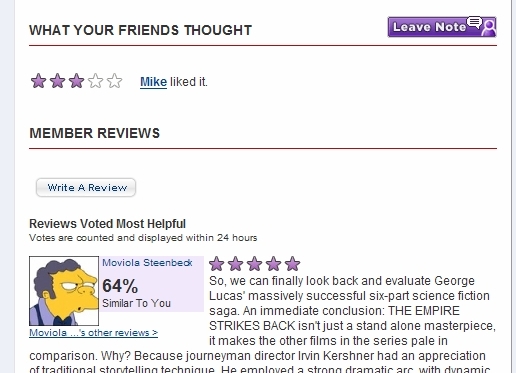
- Are they honest and authentic?
- Are they like you in a way that is meaningful?
- Are they qualified to adequately rate the good or service in question?
-
-


Would you like to comment?
Join Diigo for a free account, or sign in if you are already a member.