
This link has been bookmarked by 12 people . It was first bookmarked on 11 Dec 2006, by rrobert_ah.
-
10 Apr 14
-
for dynamically distributing network configuration parameters
-
based on the client-server model.
-
When a computer or other networked device connects to a network, its DHCP client software in the operating system sends a broadcast query requesting necessary information.
-
Any DHCP server on the network may service the request.
-
On receiving a request, the server may respond with specific information for each client
-
dynamic allocation
-
automatic allocation
-
preferentially assign to a client the same IP address that the client previously had.
-
static allocation
-
using the User Datagram Protocol
-
and UDP port number 68 is used by the client.
-
UDP port number 67 is the destination port of a server
-
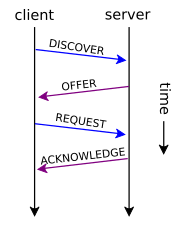
DHCP operations fall into four phases: server discovery, IP lease offer, IP request, and IP lease acknowledgment.
-
begins with clients broadcasting a request
-
The client broadcasts messages on the network subnet using the destination address 255.255.255.255 or the specific subnet broadcast address
-
may also request its last-known IP address.
-
An authoritative server denies the request, causing the client issue a new request. A non-authoritative server simply ignores the request, leading to an implementation-dependent timeout for the client expire the request and ask for a new IP address.
-
. This message contains the client's MAC address
-
the subnet mask
-
the IP address that the server is offering
-
the lease duration
-
and the IP address of the DHCP server making the offe
-
. A client can receive DHCP offers from multiple servers, but it will accept only one DHCP offer.
-
, broadcast
-
servers are informed whose offer the client has accepted
-
DHCPACK packet to the client.
-
The protocol expects the DHCP client to configure its network interface with the negotiated parameters.
-
-
09 Feb 13
-
09 Feb 09
 Michael Tanczos
Dynamic Host Configuration Protocol (DHCP) is a network application protocol used by devices (DHCP clients) to obtain configuration information for operation in an Internet Protocol network. This protocol reduces system administration workload, allowing devices to be added to the network with little or no manual intervention.
-
12 Sep 08
-
12 May 08
-
-
28 Mar 08
-
dynamic, in which the client is provided a "lease" on an IP address for a period of time.
-
automatic (also known as DHCP Reservation), in which the address is permanently assigned to a client, and manual, in which the address is selected by the client (manually by the user or any other means) and the DHCP protocol messages are used to inform the server that the address has been allocated.
-
-
12 Jun 07




Would you like to comment?
Join Diigo for a free account, or sign in if you are already a member.