The Grotte du Lazaret, Nice, France.
The text below is from 'The Prehistory of Europe' 1980 by Patricia Phillips
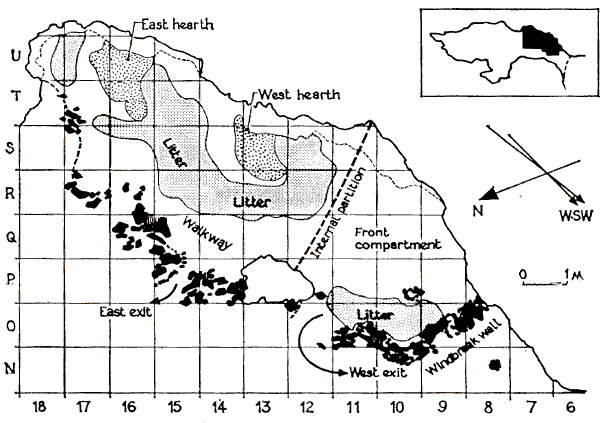
The Le Lazaret cave contains a sequence of deposits, but the presumed living floor lies in the upper levels. The diagram
(after de Lumley, 1969, Une Cabane acheuléene dans la grotte de Lazaret, Fig 54) shows the ground plan of the Le Lazaret 'tent', southern France (inset shows the protected area of the cave)
It dates to the third stage of the Riss glaciation in conventional terms, while aminoacid tests have produced dates c. 150 000 B.P. De Lumley has published detailed distribution maps of the position of stones, flint tools and debris, bone, charcoal and shell, and suggested that the Acheulian hunters created a shelter about 11m X 3.5m at one side of the cave.
The bottom of the shelter wall is defined by rows of stones, including possible post-supports. A skin curtain and roof may have been draped over the posts. The distribution of finds suggested entrances and internal compartments, with two hearths in the larger compartment and none in the smaller. The presence of tiny sea shells, which would have been attached to seaweed, and of the foot bones of fur-bearing animals like wolf, fox, lynx and panther, around the hearth and in the smaller compartment, may indicate bedding. The tools include hand axes and choppers, and lots of tools made of pebbles, of Upper Acheulian type.
Study of the pollen contained in coprolites suggests that the cimate had been colder than today, with stands of pine trees in the vicinity of the cave. The shelter would have provided protection from wind and cold, and represents an attempt to achieve a 'home'.
 The text below is from 'The Prehistory of Europe' 1980 by Patricia Phillips

Page Comments
Would you like to comment?
Join Diigo for a free account, or sign in if you are already a member.